AMC – Gone but Not Forgotten
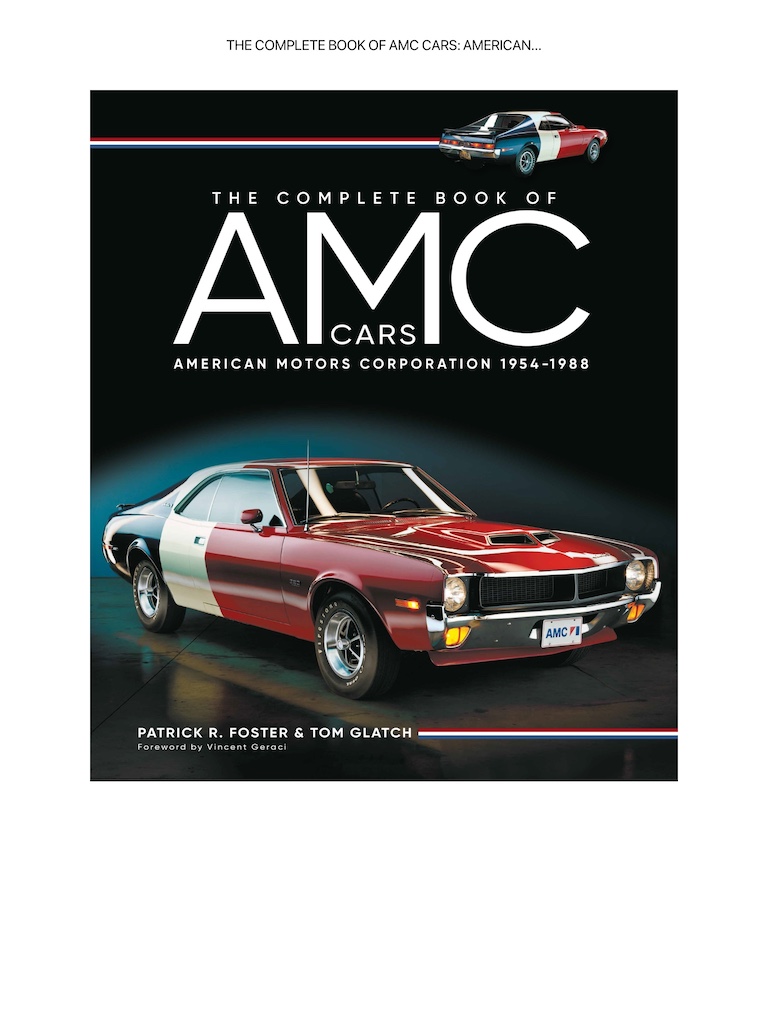
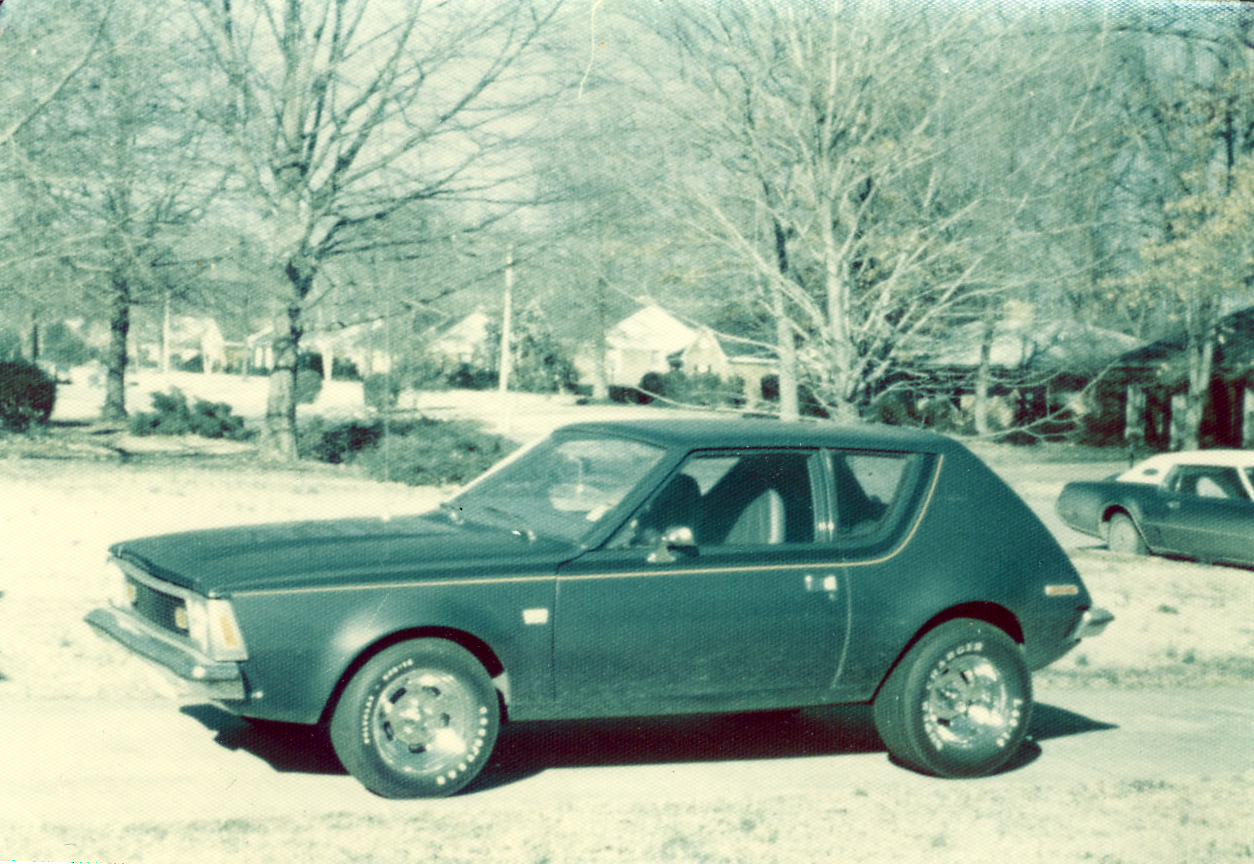
I’ve done it again. I’ve gone and read another car book—one to add to the multitude of car books that I have already read and of which I have previously posted. I considered adding this latest one to my “Best of” books for 2025 but I doubt many of you would have agreed with that assessment. However, for me, this book was special. For you see, my first car was a 1973 American Motors Corporation (AMC) Gremlin, and this book told some of its story.
I don’t recall how I became aware of the publishing of this book but as soon as I saw it, I knew I had to purchase it because my familiarity with AMC dated back even before that Gremlin to my early childhood.
A little automotive history is in order to understand why.
In 1954, a new company, American Motors Corporation (AMC) was founded with the merger of independent car companies Hudson and Nash-Kelvinator (yes that Kelvinator of dependable appliance fame) which created the country’s fourth largest auto maker behind General Motors, Ford, and Chrysler. Nash produced a number of cars named Rambler which if you were born in the 1950s or 1960s might remember carried over to the merged company. And thanks to Pixar’s movies Cars, the Fabulous Hudson Hornet named Doc Hudson (voice of Paul Newman) which won car races in the 1950s would also be familiar to many of you. So how does this tie to my childhood you ask?
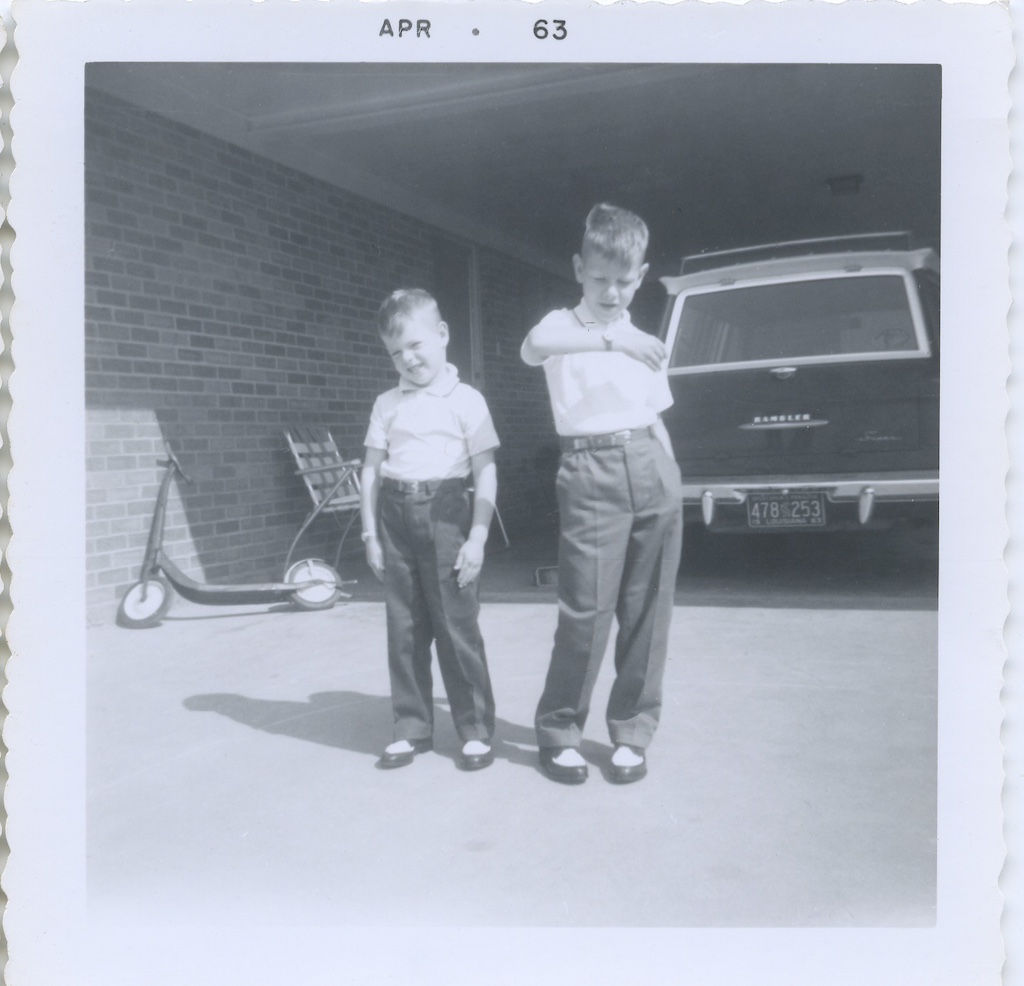
In my single digit age years in the early 1960s, I recall my dad owned at least two and maybe three different Ramblers. I distinctly remember this red station wagon we had (although I know you cannot tell it was red from this Black & White photo), and I think we had a green station wagon as well. I think he also at one point owned a Rambler sedan (I say “he” because my mother never learned to drive and so these were my dad’s cars).
To be completely up front, this is a book for car lovers. It covers in detail the models produced from the first in 1954 to the last in 1988. Each year over that 35-year history, all the models sold that year are individually discussed along with some of the development that went into those models or changes that were made that year. Production numbers by model are documented as well, which highlights the company’s rocky financial ups and downs. Also included are some of the print advertisements. But the real treat for me was the inclusion of publicity photos for many of the cars.
As I read through the chronological history of the company, the photos of models from the 1960s truly sparked recollections for me as this was the first time I laid eyes on color photos of the cars my dad owned—memories that that for me had been buried in my mind since before I was 10 years old.

And once I got to the 1970s, I hoped I would find my first car.
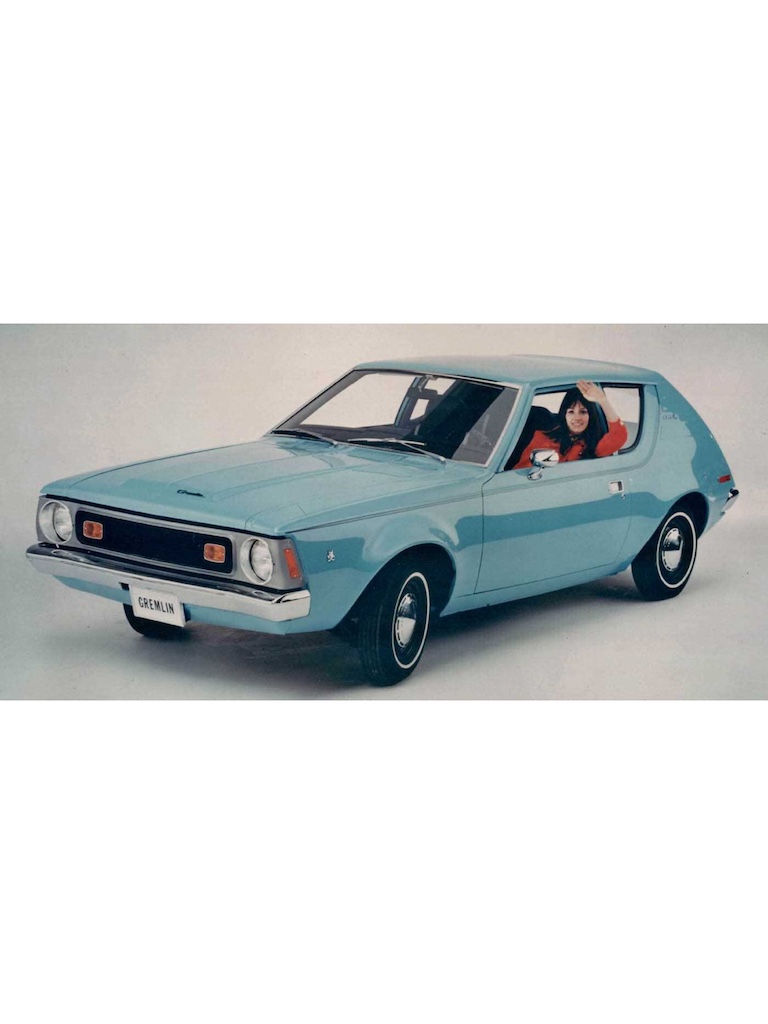
If you look at a Gremlin (and they actually have become collectors’ items now), it looks like the back was lopped off another car. Which is exactly what happened. When they designed the Hornet (name no doubt recalling Doc Hudson’s famous ride), they included an extra 12 inches in the midsection that could be cut out. So, the Gremlin is in fact a lopped off Hornet (pictured below).
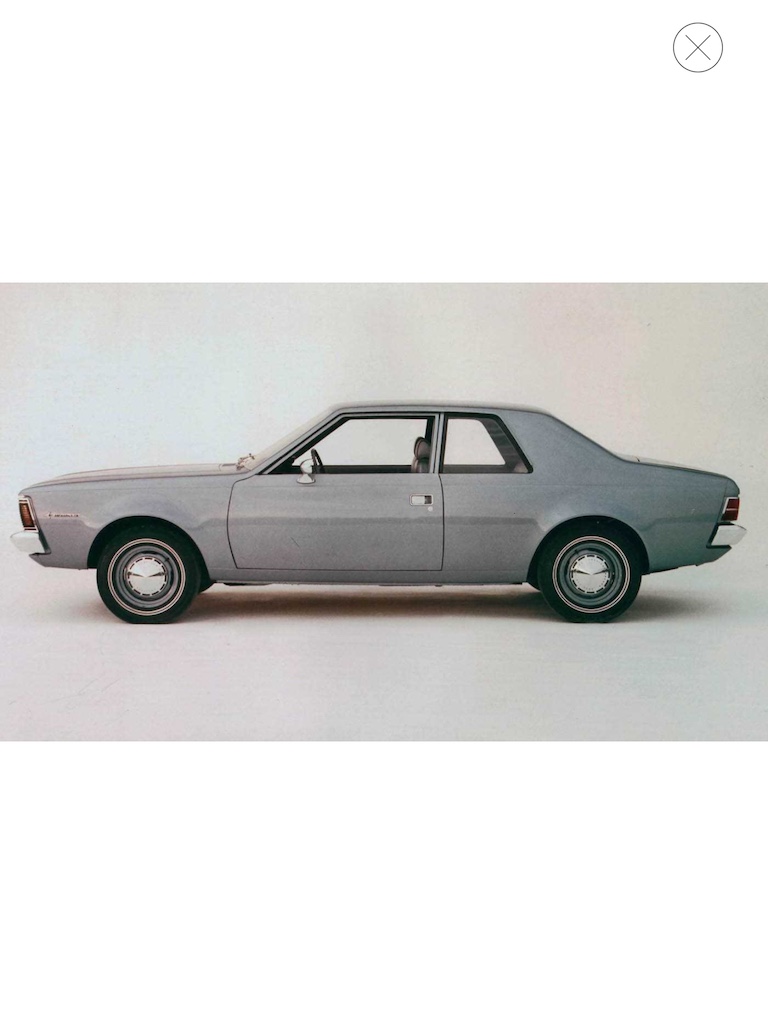
The Hornet and Gremlin were both introduced in 1970, and I could see their similarity to my 1973 model. When I got to the year 1973, I hoped I would find a great photo of my special edition car. But sadly, it was not to be.
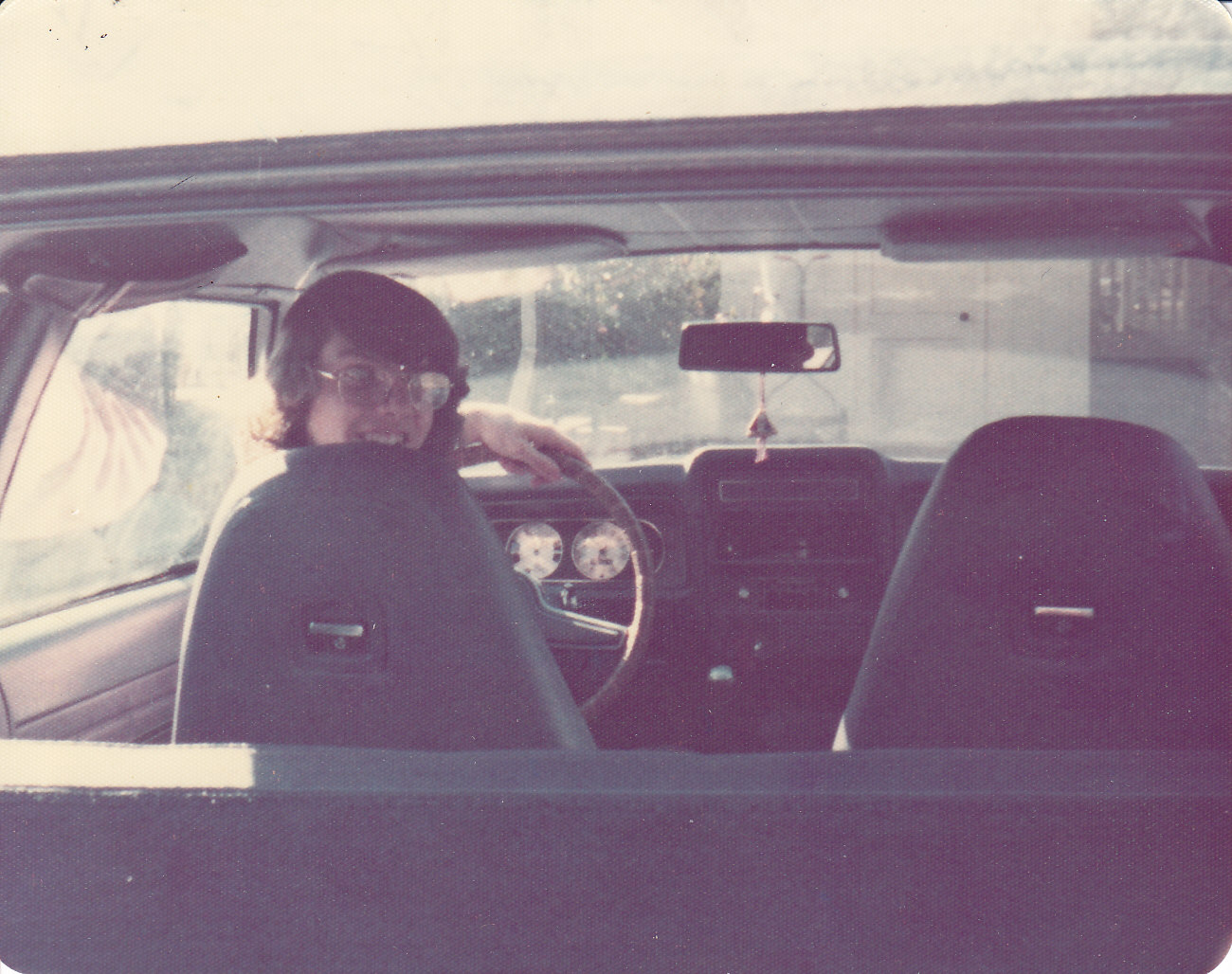
Returning to that photo of mine (ignore the flashy wheels and jacked up rear end that I added in high school), on the front fender just behind the front wheel is the famous Levi emblem. Yes, my car had stitched Levi’s blue denim interior with the ubiquitous copper brads (although I learned in the book it was not actually cotton denim material like our jeans were made from as it would have faded severely in sun light). And just like our jeans when a hole or rip occurred, I repaired rips in my seat fabric with those iron-on blue jean patches.
As I read, I learned that Rambler and AMC introduced many innovations over its too short history, one of which is “unibody” construction which is still widely used today (unibody where body, floorboard, and frame are integrated together as opposed to body-on-frame like trucks where the two are manufactured separately). In fact, as competition for SUVs that were becoming popular in the early 1980s, AMC introduced the Eagle in three model formats, the first lifted passenger car with four-wheel drive (a precursor to today’s Subaru Outback).
At times, AMC made great headway against the fierce competition from the “Big Three” but even in their best years, AMC never garnered more than 10% of the total US market. As the 1980s were about to begin, it was obvious AMC was headed on an unsustainable path with record losses being racked up each year. It was a poor economy that impacted all car producers.
You may recall from that era the controversial 1979 Chrysler government-backed loan that Lee Iacocca secured (also referred derisively as the Chrysler Bailout). Chrysler was deemed too big to fail and so the government guaranteed a 1.5-billion-dollar loan to them (which in Chrysler’s defense, they paid back early with interest). But tiny AMC was not so lucky (nor Bear-Stearns decades later).
In 1979, AMC’s shining white knight, at least it seemed at the time, was the French owned car company Renault. But as they purchased more and more AMC stock to bolster AMC finances and became more and more in control, they dictated what AMC could and could not do. As they co-developed the Renault Alliance, current AMC models were discontinued and AMC was prevented from even making badly needed updates to their last remaining models, those innovative Eagles. While Renault may have kept AMC from going bankrupt in the early 1980s, they ultimately killed the company.
That death came in 1987 when Lee Iacocca brokered a deal to purchase the remaining AMC assets from a now struggling Renault. Obviously, the remaining crown jewel was Jeep, a car company that AMC had purchased in 1970 (and which Chrysler has since grown into a valuable brand). For the 1988 model year, only 2,305 AMC Eagles were produced (all before the end of December 1987) with the last being sold in January 1988.
As I mentioned, unless you are a car lover, you will have no intertest in reading this book. For me though, it brought back fond memories of the cars I rode in as a young child. It was fun learning the history of those cars and it confirmed my first car was a truly unique model, one I now wish I had never sold.
Categories

 onecreativescientist
David, for me, cars are transportation. But I do enjoy your passion for cars, and I’d guess my son MIchael has a similar passion. I do remember the Gremlin car. I went to a private girls high school, and we had a car pool. One family had a Gremlin,and I remember there were at least 4 of us – plus the mother – in the car. There may have even been 5. I believe our back packs were in the back. Their Gremlin was kind of an orange car. I also remember the Lee Iacocca bailout. I read his autobiography years ago. I also sent money to his organization to have my grandma’s name put on the Immigrant Wall of Honor. And my Grandma – like your mom – never learned to drive. My first car – which I bought from my Grandpa – was a Dodge Coronet. I’m not sure what year it was. It had push buttons for Park, Drive, Reverse, etc. That car was a tank. I’m glad you enjoyed this book so much.
Thanks Betty and thanks for sharing some of your own automotive heritage! I’m here at my sister’s working on some more dollhouse furniture which will be featured in a future post. Have a great holiday weekend!