A Mini Bourbon Trail – Getting Our First Real Taste
Continued from: A Mini Bourbon Trail – Getting Acclimated
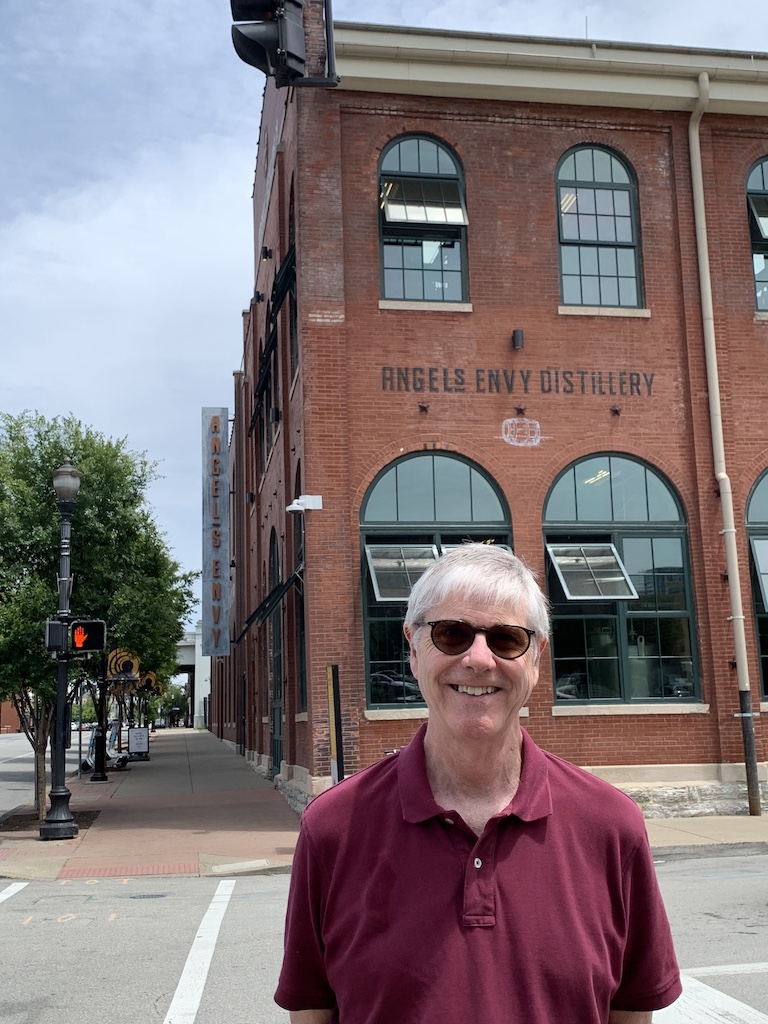
We made it in time!
Angel’s Envy was our first appointment on East Main Street. I had picked this one as I knew it was a more expensive bourbon than either of the two brands I usually purchased. And when I selected it, I had no idea that I had picked one of the two extremes of the industry in terms of years of existence.
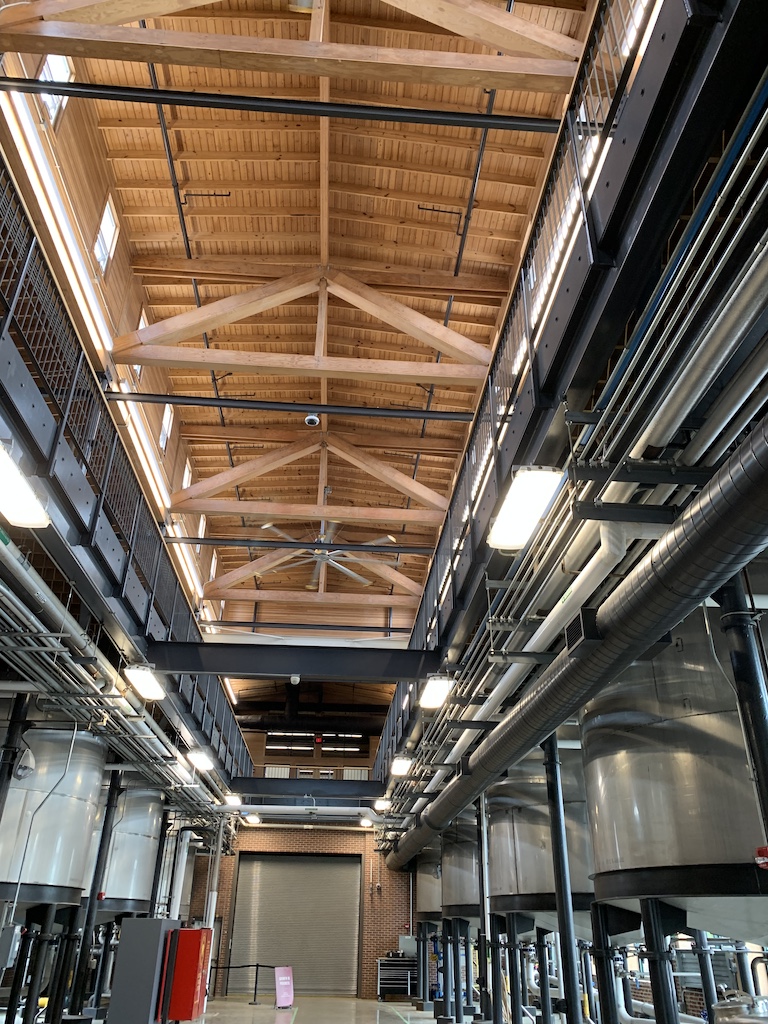
Angel’s Envy was founded in 2010 and the full-scale operation opened its doors to visitors in 2016. It was essentially brand new, and its equipment showed it. From the shiny manufacturing tanks to the beautiful wooden ceiling (which had to be added to the old, abandoned building since the original roof rotted away).
Our knowledgeable tour guide first explained how the name of the company was chosen which goes as follows:
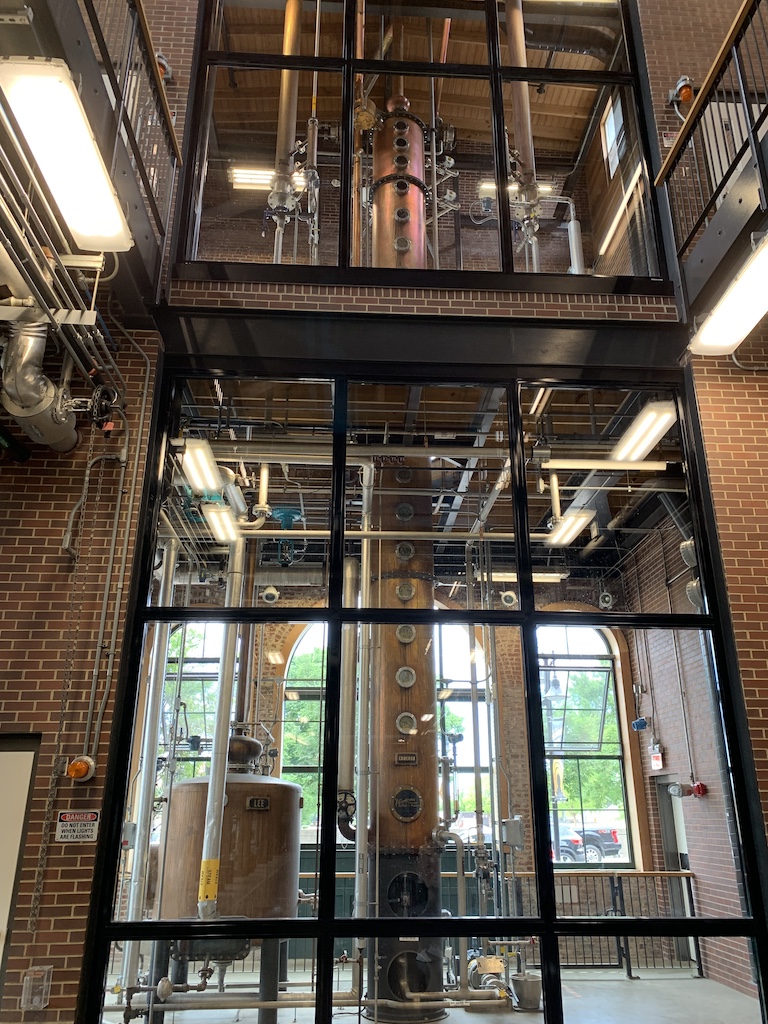
Once the completely clear high proof alcohol is distilled in this two-story still and transferred to a charred oak barrel, it is stored in a “Rick” house for anywhere from five to fifteen years. This is where it typically gets its characteristic color. During that aging process, about 3 to 5% of volume per year is lost to evaporation. If aged for 10 years, this means as much as half the volume can be lost. This is referred to as the “Angel’s Share.” To the founder, what was left in the oak barrel was then the “Angel’s Envy.”
Here we further learned that to be legally labeled Kentucky Straight Bourbon, there were a number of rules that had to be followed in the production process. The first of which was that the recipe of ingredients or mash bill as it is known, had to contain at least 51% corn with lesser amounts of rye and malted barley. In their case, it contained 71% corn, 19% rye and 10% malted barley. It further had to be aged in virgin, charred oak barrels for a minimum of two years
As we toured the facility, our guide talked us through the entire production process. When we came to a mash tank where those three ingredients were being heated with water, we were even allowed to taste the immature mash (I didn’t like it though some of the other folks did).
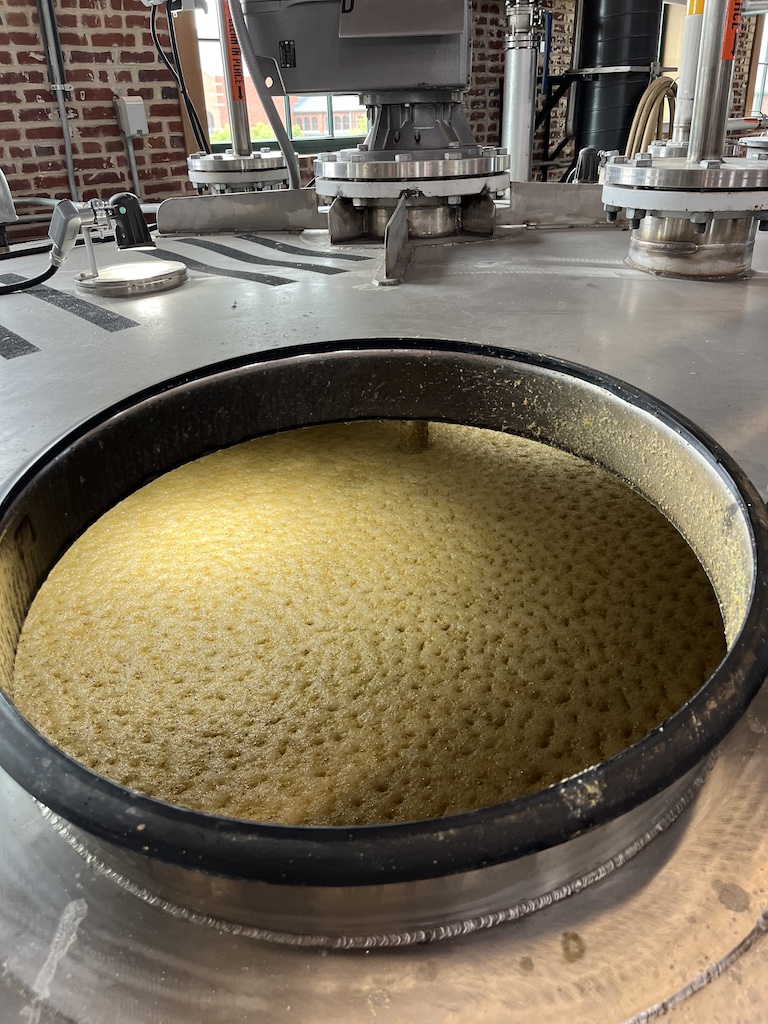
As we made our way into the room with the still, he had a bottle of 140 proof clear liquid that we could use as a “hand sanitizer” enjoying the wonderful aroma as we rubbed our hands together.
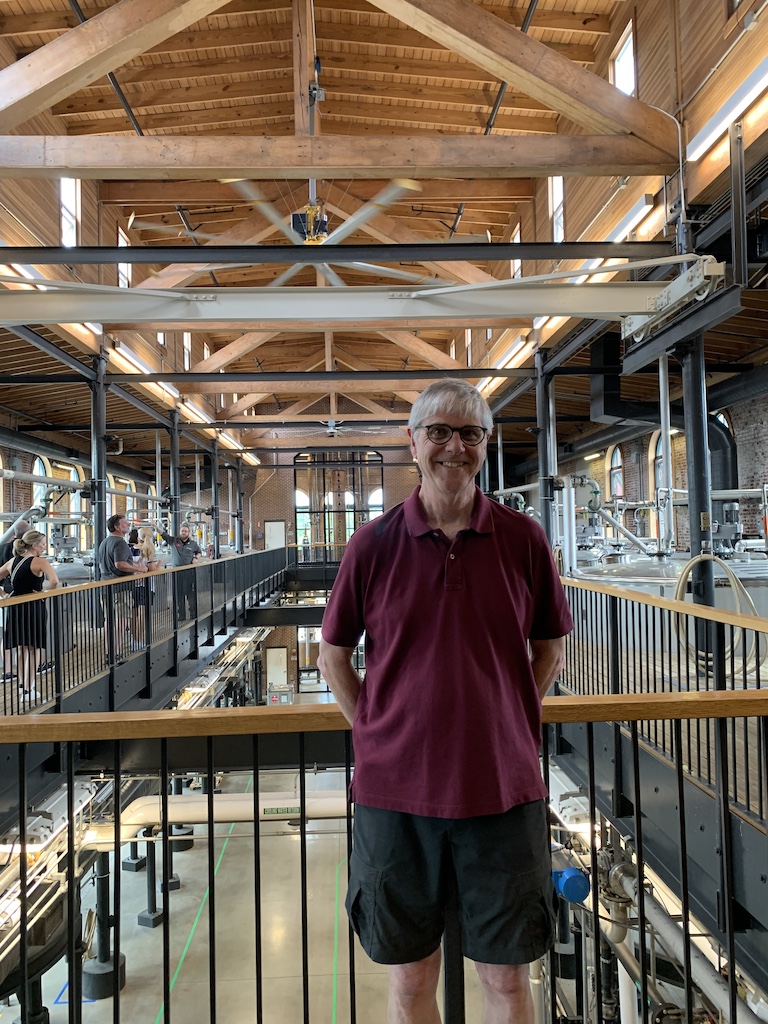
After showing off their brand new, state of the art packaging line, we went to a tasting room where we got to sample their flag ship bourbon and rye paired with some tasty chocolates. Just like on a wine tour, we were asked to identify the different flavors and aromas we detected and in the case of the bourbon, how different that seemed when just a single cube of ice was added.
I felt when we left there that we had gained a tremendous amount of knowledge about bourbon and its production. That night at dinner, I was amazed at the nine pages of different bourbons that we could select to try. While New Orleans has its Bourbon Street, Louisville truly is a bourbon town.

After a delicious salmon dish, …

… I enjoyed another of Louisville’s culinary creations—Derby Pie.
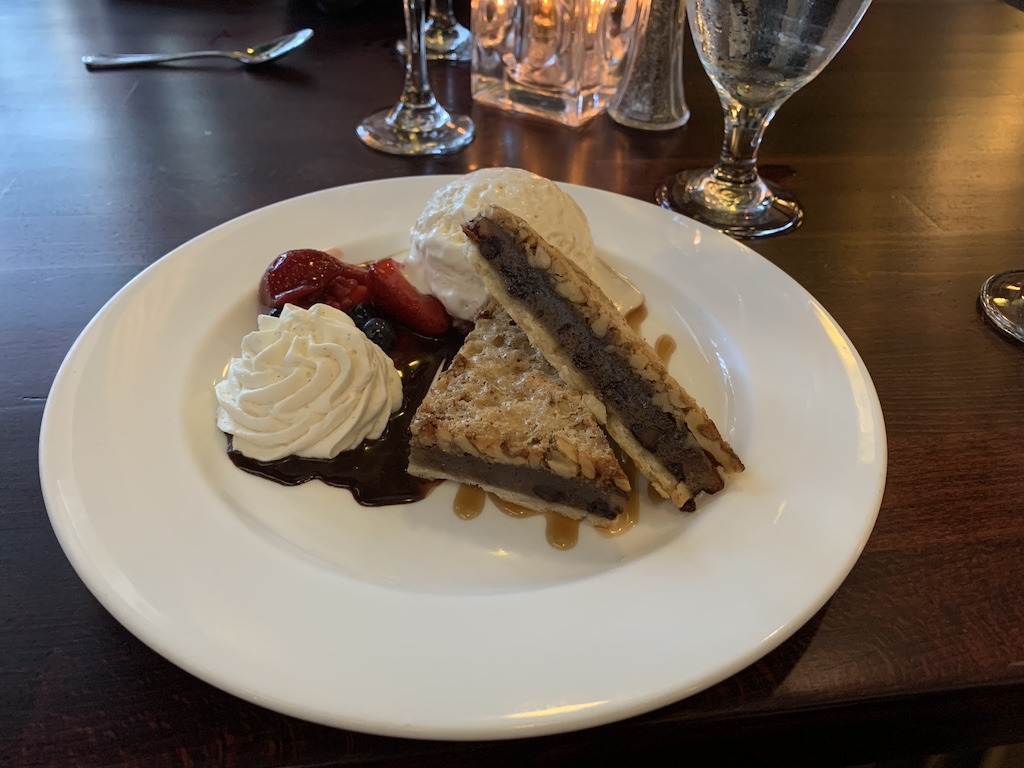
I had seen a picture of this and thought it looked like my favorite pecan pie. But reading the details, it is made instead with walnuts and includes chocolate chips. It too was delicious!
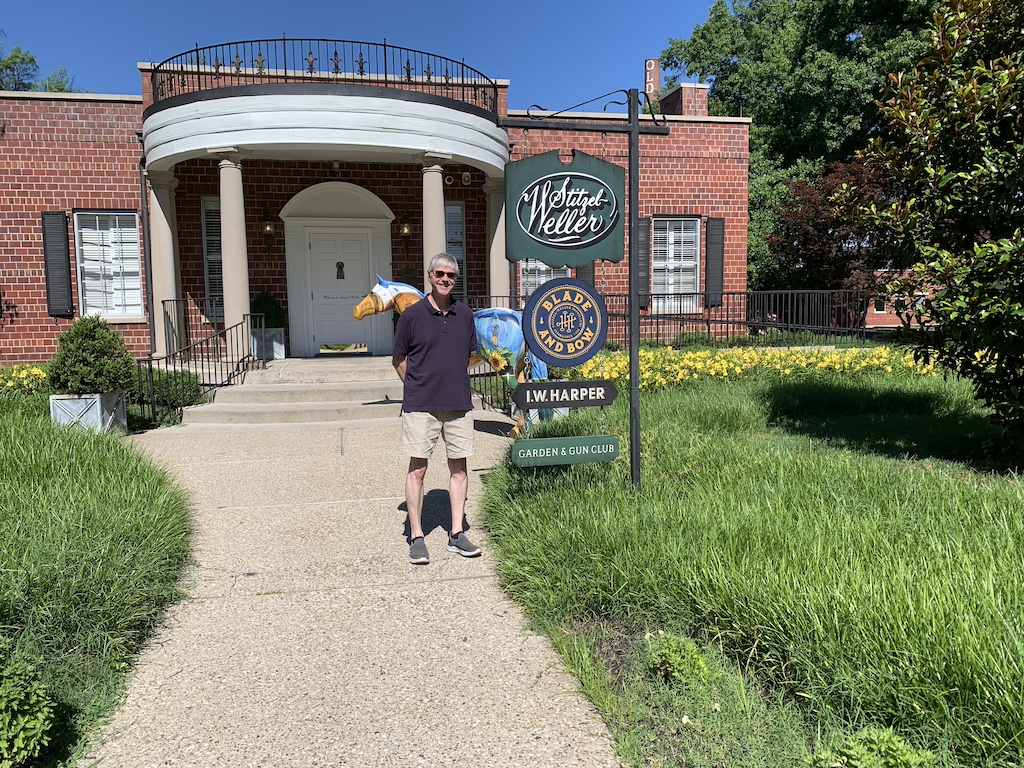
On Monday, our last full day, we drove to Stitzel-Weller just five miles south of downtown. Note the colorfully painted horse behind me. These we had seen all over town.
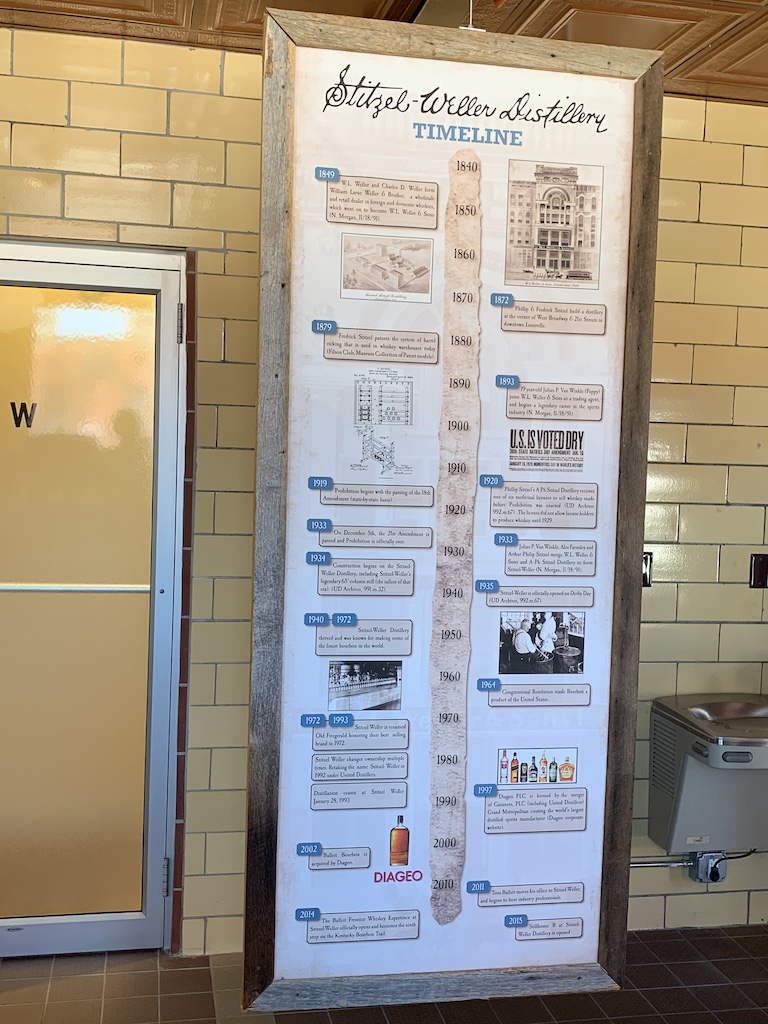
Unlike the fully operational distillery that we visited on Sunday, this one served just three purposes. Obviously, the visitor center but also an R&D site. Its only contribution to the production was there were 12 rickhouses on site, each holding up to 18,000 barrels of bourbon for aging. Our tour guide started off with some history of the company. While the company was originally founded in 1872, the rural site where we were standing was opened on Derby Day in 1935. So, we had moved from a 15-year-old distillery on Main Street the day before to one that was nearly ninety years old.
Contrasting with our tour the day before, this was more of a history tour. During prohibition, the US government set up 10 licenses for distillers to continue to manufacture and sell their fare for “medicinal purposes” (ironically only six were issued as no one else applied). She explained that needy “patients” could have their doctor prescribe these distilled spirits for them where they were then filled at a pharmacy. It sounded a bit like a precursor to the “medical marijuana” pharmacies available in some states today.
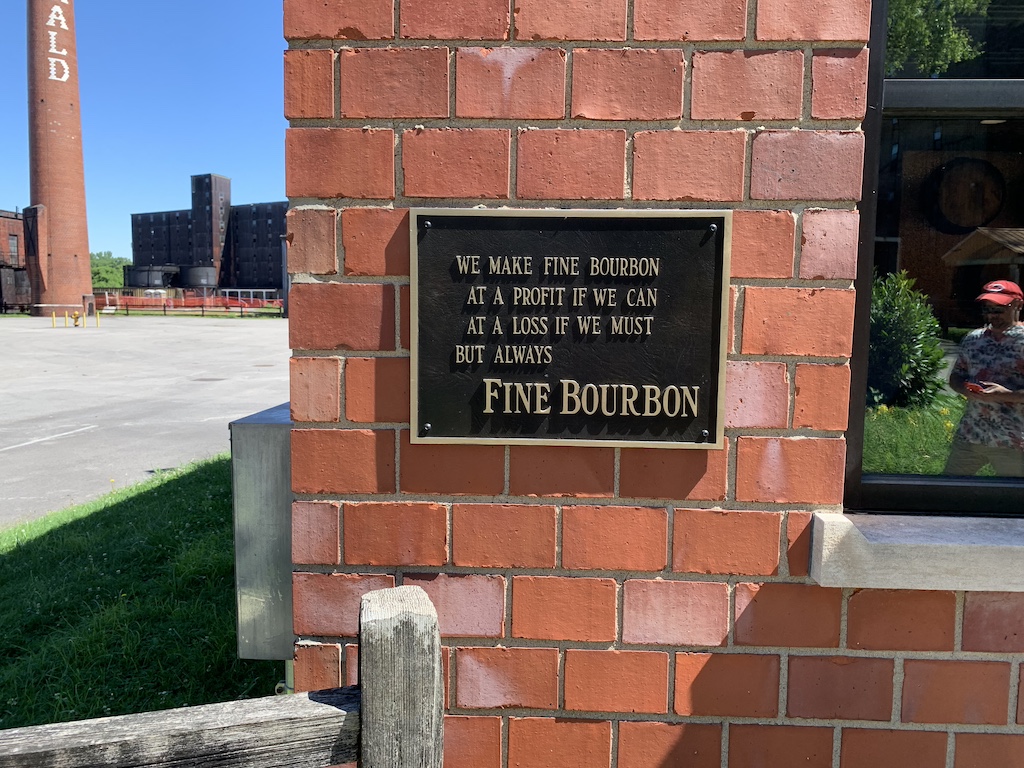
On our way to the next building, the R&D facility, we passed the tax man’s office. Here, the tax man worked to ensure proper tax was levied on all the alcohol produced and stored. On the wall was a plaque of the phrase made famous by one of the most well-known owners of the distillery, Pappy Van Winkle.
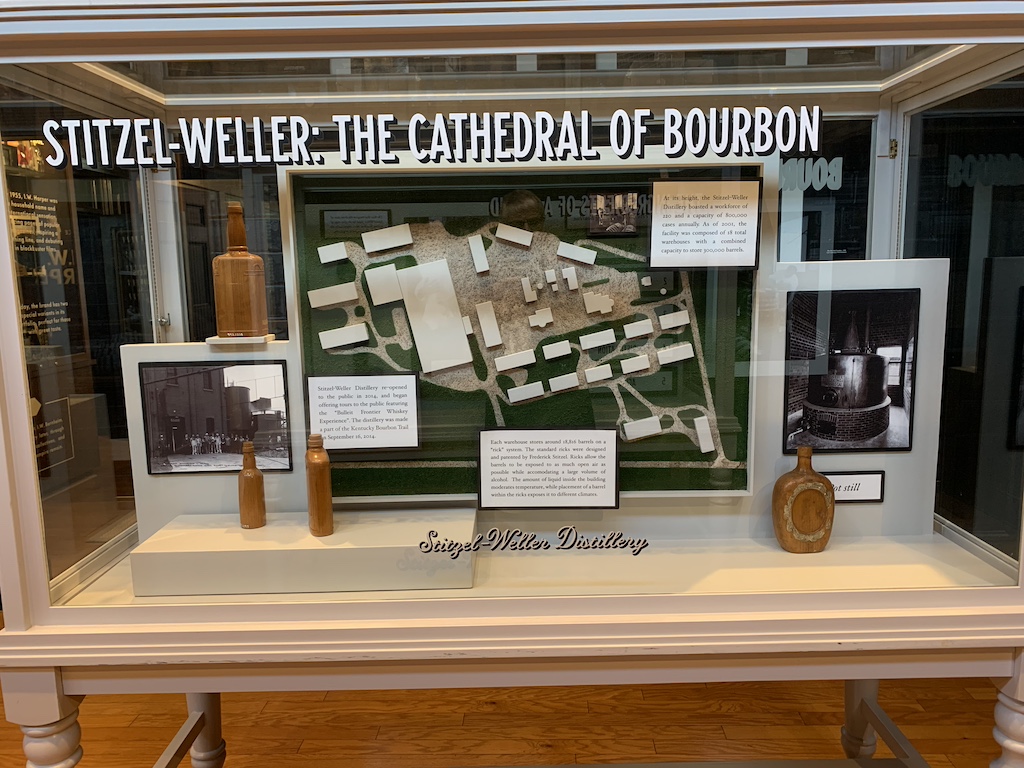
We toured the R&D facility which displayed a number of pieces of antique equipment along with a map of their timeline.
We then went into the R&D pilot facility where much smaller versions of tanks and a small still were installed.
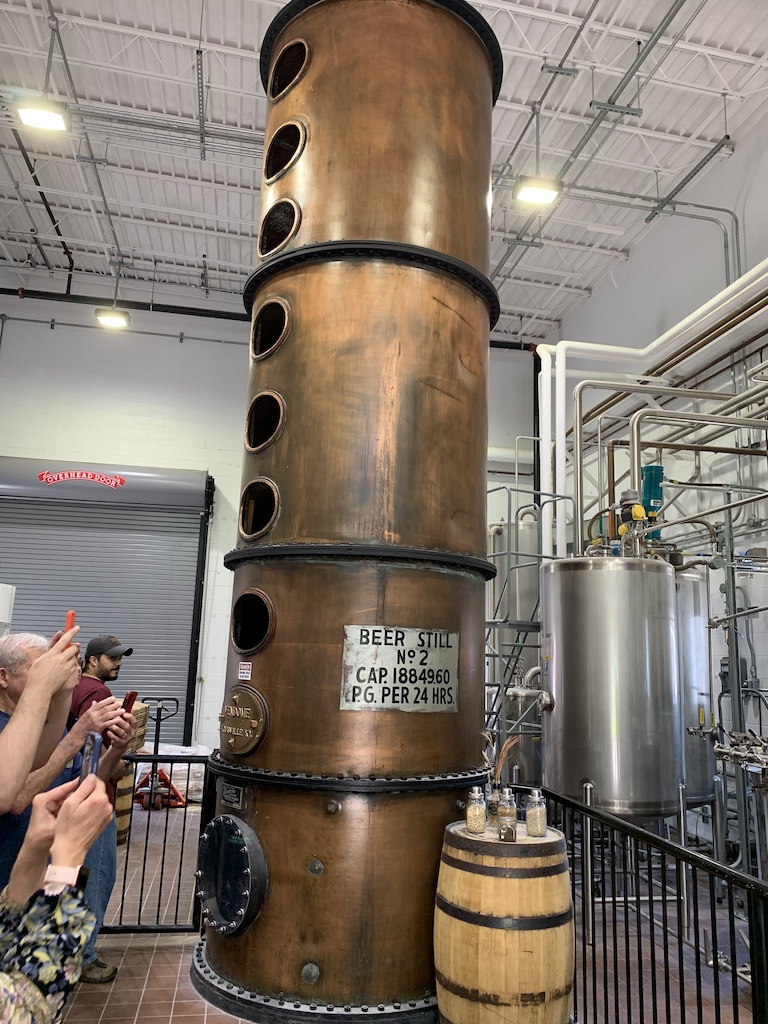
Since I worked in the pharmaceutical industry where the research we did to establish an expiration date for our products took years to confirm, I could commiserate with our tour guides statements that it could take up to 10 years of aging in the barrels before they would know if the experimental batches they had made in R&D were any good.
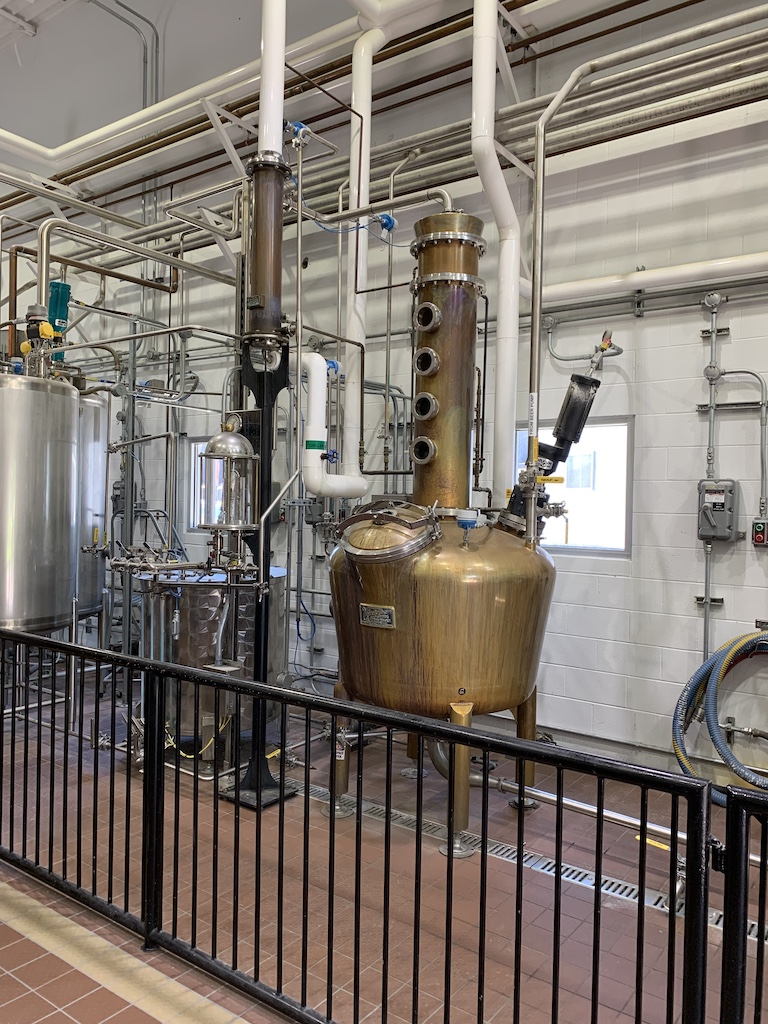
We then walked over to one of the rickhouses where those 18,000 barrels of bourbon could be stored.
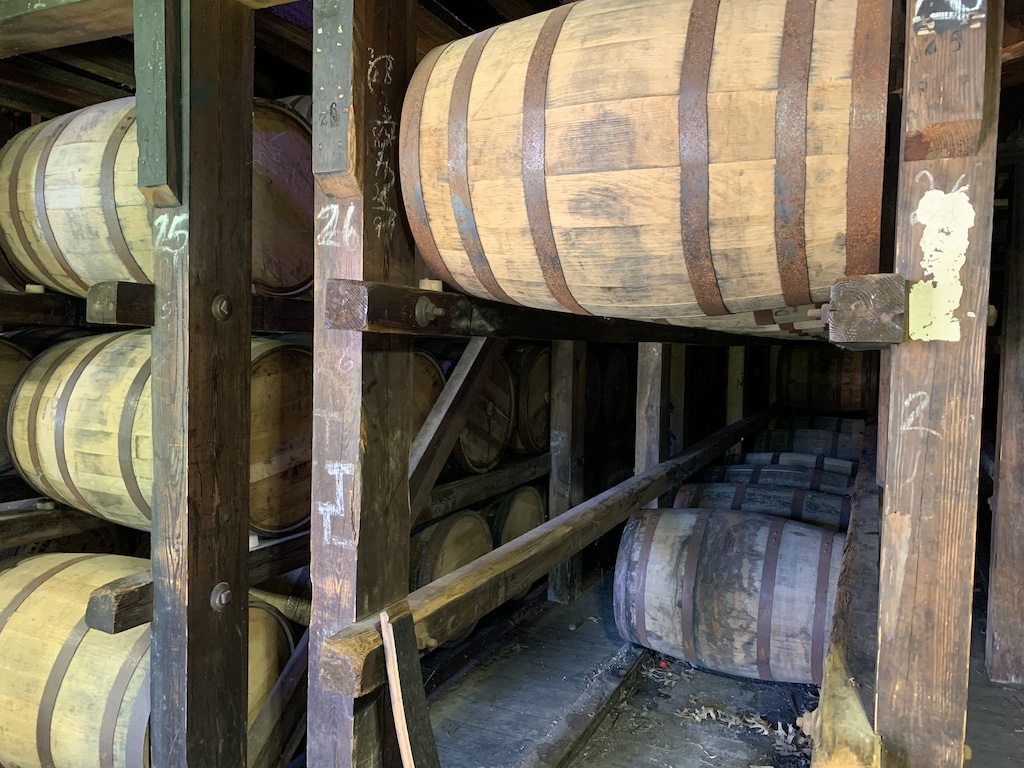
A soon as we walked in, we could immediately smell the Angel’s Share. It was for this reason that we were cautioned before the tour started that no smoking or flash photography could be used as the results would be, well not good, but explosive! The name “rickhouse” is believed to derive from the Irish word “righ” meaning king. In the old country, these rickhouses were referred to as the “king’s warehouse.”
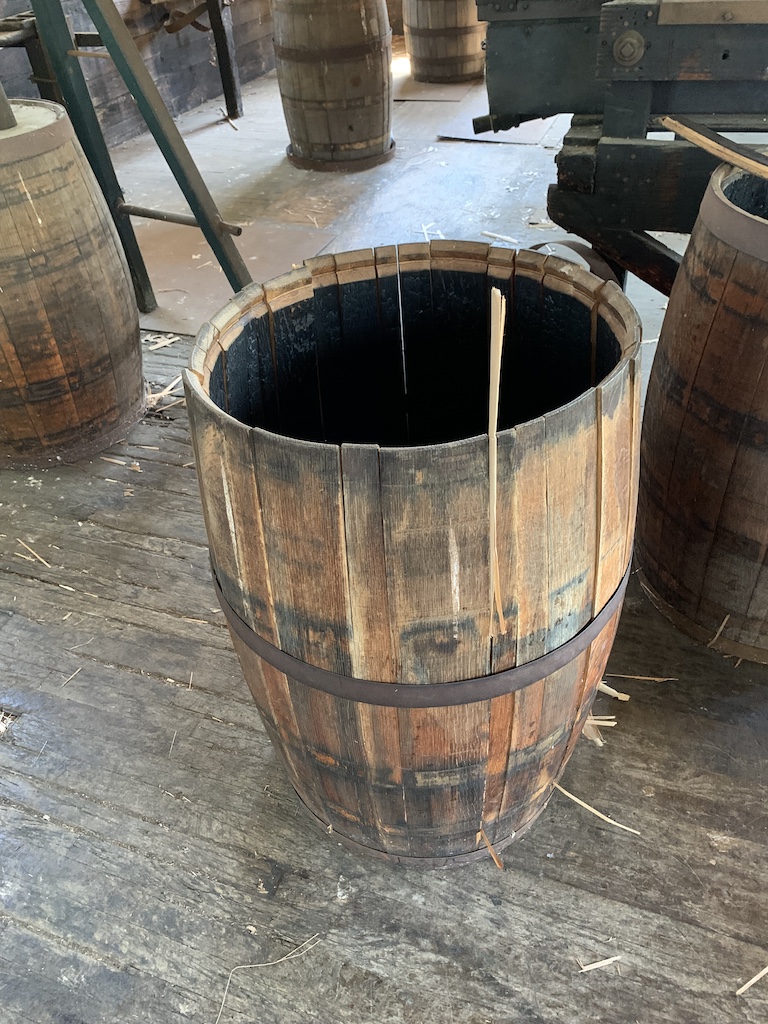
Our last stop before our tasting was in the Cooper shop where we learned how leaking barrels were emptied, repaired with a inserted reed, and refilled all in about six minutes.
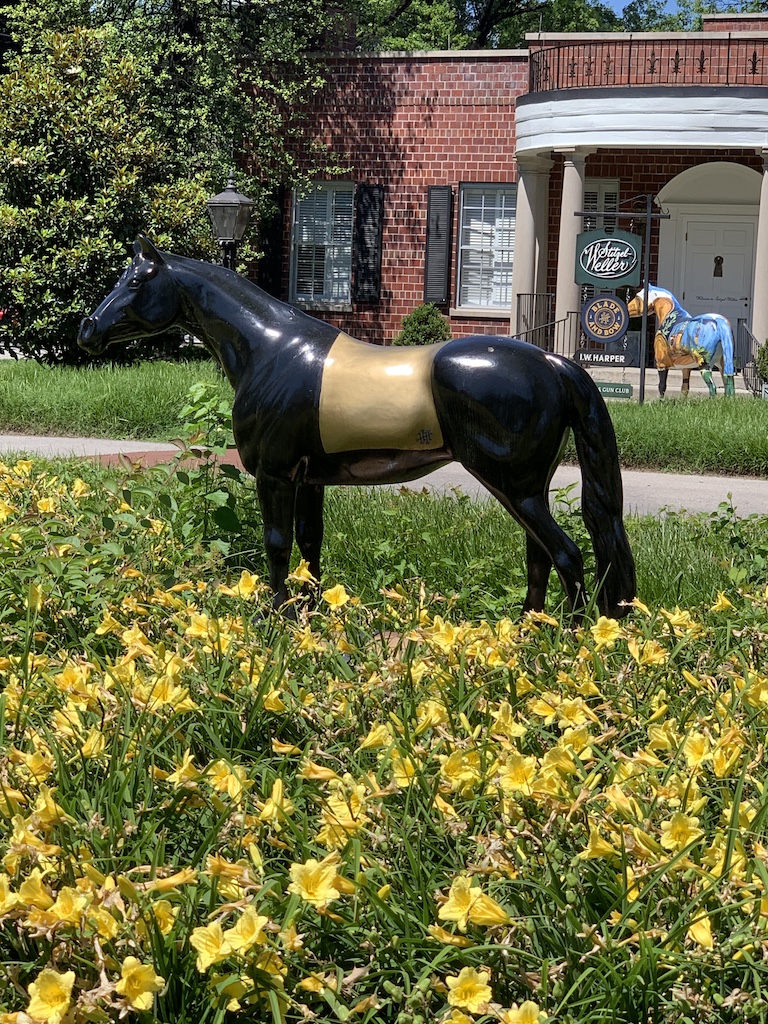
On our way to the tasting, we paused at the statue of the horse that won the Kentucky Derby in 1935 on the site’s opening day. It serves as a sort of mascot for the site. Our tasting as before, was an enjoyable experience, sampling four different bourbons one of which was a single barrel (which is always more expensive due to its small volume of production).
Leaving Stitzel-Weller, we had plans for a couple of afternoon activities.
To be continued…
Categories

 onecreativescientist
Very interesting, David. I enjoyed this post even though I am not a bourbon fan. You picked a nice mixture of distilleries to tour giving you a well rounded taste. (ha ha) I won’t forget the meaning of “Angel’s Envy” and “Angel’s Share.” Also, the history of some production allowed during prohibition is new to me, and it does sound like medical marijuana. We have a very popular BBQ restaurant in our New Town community, and the owner just opened up a separate area for “Bourbon and Cigars.” Some are very excited about it. Looking forward to reading about your afternoon activities.
Thanks Betty! I appreciate you reading even though it’s not a drink of yours and your kind comments. It was interesting to learn these things. I knew from visiting CA wineries that some were allowed to continue to make and sell wine for religious purposes but never knew of the “medicinal” allowances for distilleries. I hope you find the last installment next week interesting as well. Enjoy your Sunday!