Best Books of 2025 – Chapter 1
Once again, I am happy to ring in the new year with what for some of my regular readers has become their favorite series of posts—my favorite books that I read from the prior year—this year posting in its 13th edition.
This year, I read a total of 68 books, 46 fiction books and 22 non-fiction books, breaking my record of 64 books that I read in 2024. And of these 68 books, about a fourth of them made my “Best of” list. So, settle up by a fire in a comfy chair, get nice and cozy, and enjoy learning about what I considered as great reads over the next several weeks.
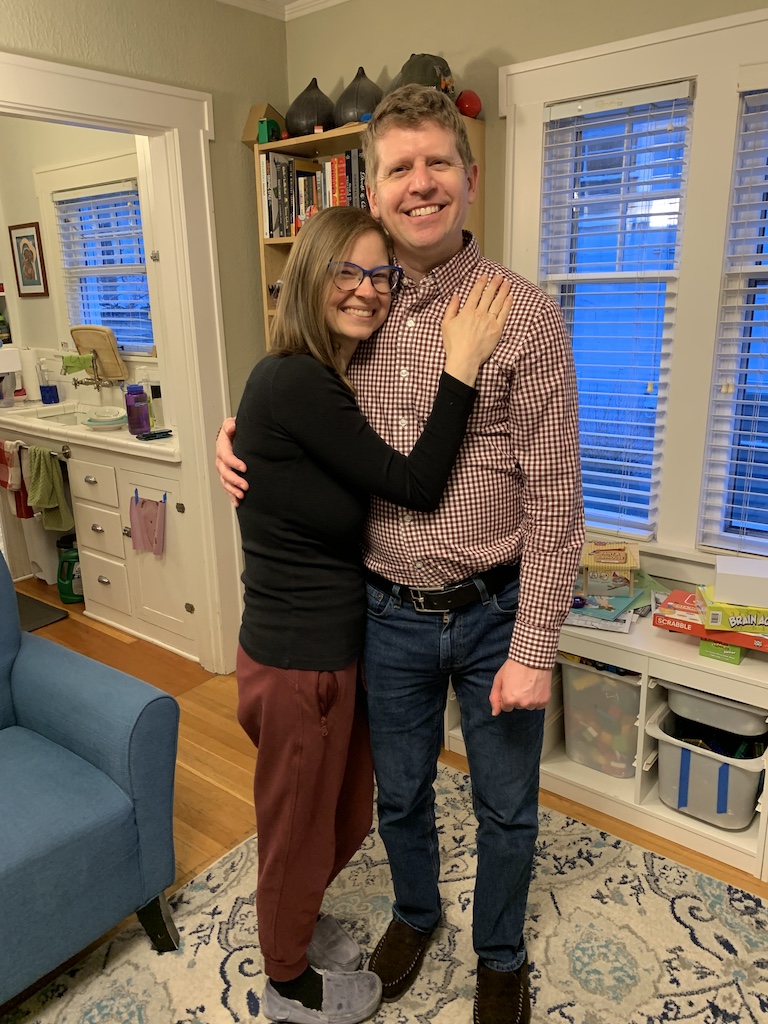
Each year for as far back as I can recall, my daughter and son-in-law have given me one or more books for Christmas. And what has occurred every time in the past, their gift also made my “Best of” list. Their latest gift, this book by Adam Higginbotham (author of Midnight in Chernobyl, another of my favorite books) is the latest to make my list.
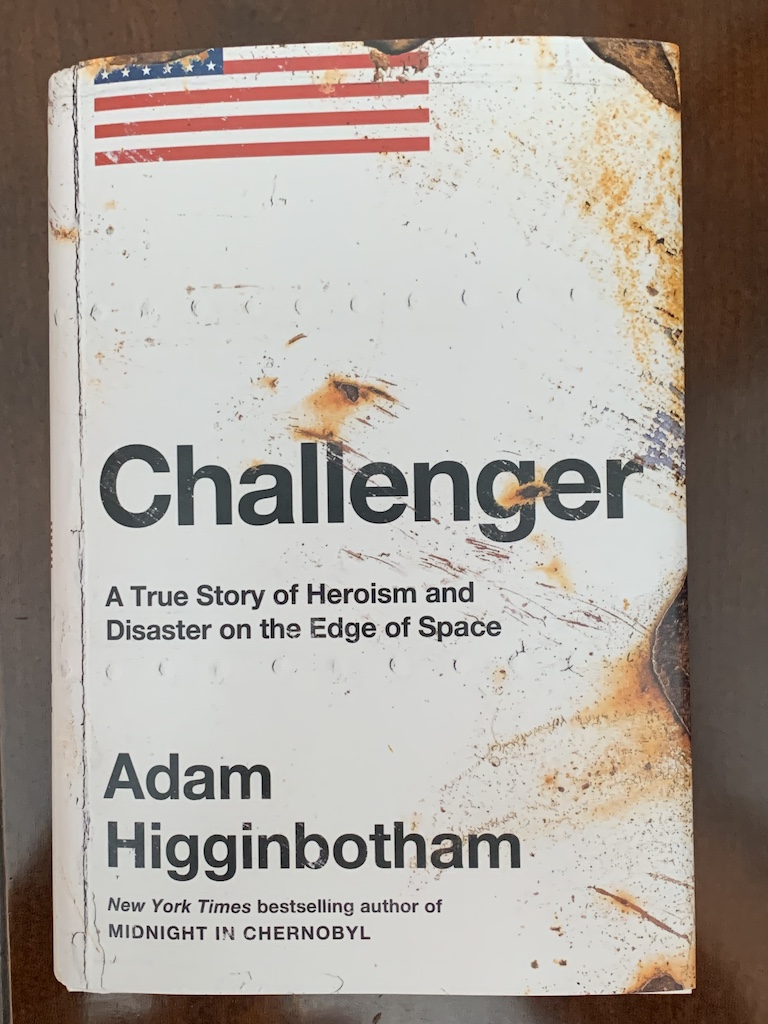
The explosion of the space shuttle Challenger in 1986 may for some of you be one of those defining moments in history much like the Kennedy assassination where we clearly recall where we were when we learned of the tragedy. For me, I know I was at work and remember someone wheeled a TV into the lab to show the news clip of the disaster. We stopped working and stared in shock as the video replayed over and over always culminating in the two booster rockets bursting out from the explosive cloud and crisscrossing in the clear blue sky.
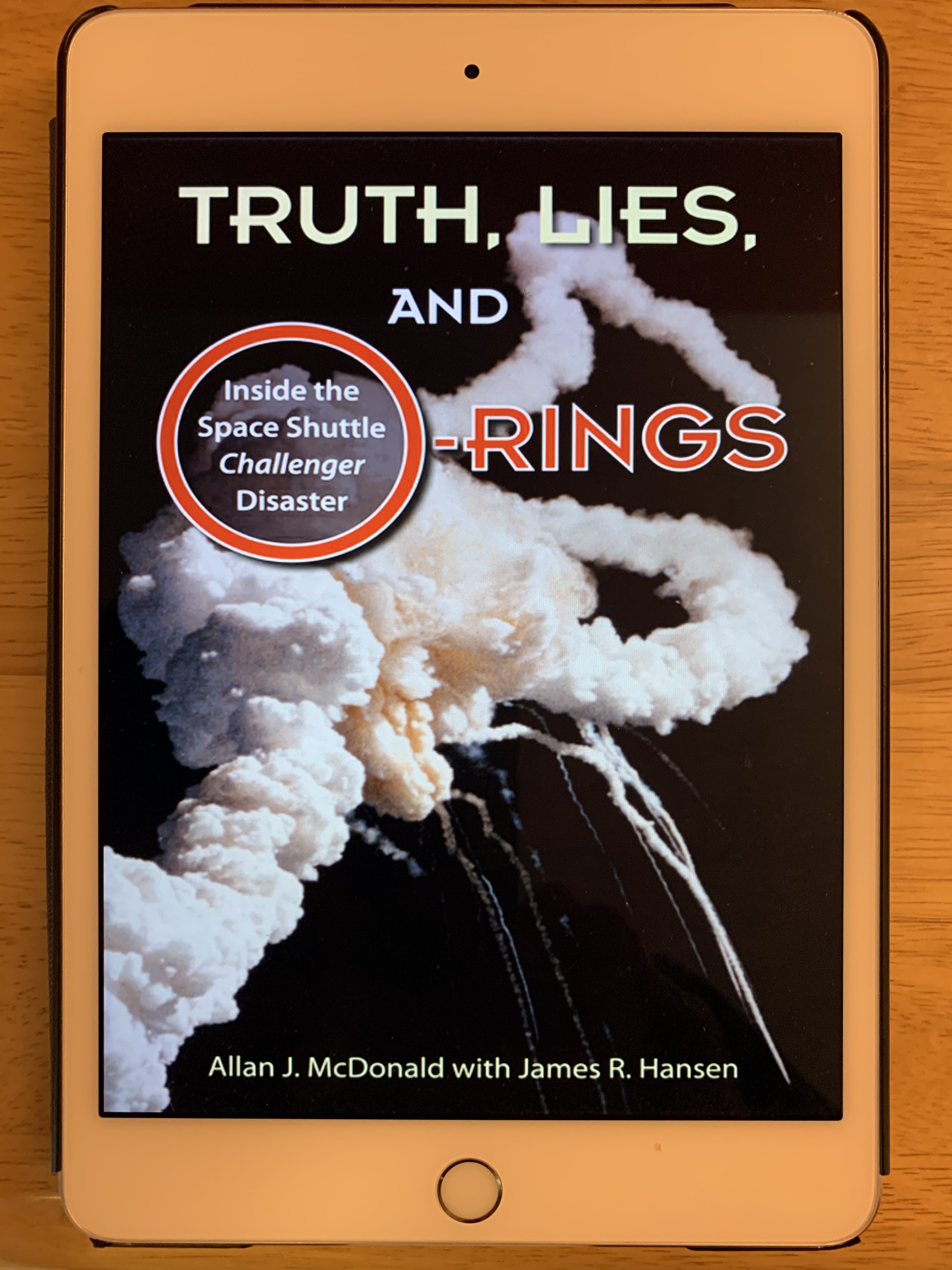
I previously read this detailed book by Allan J. McDonald, an engineer with Morton Thiokol Inc. that explained what caused the disaster and the steps he and his company took to redesign the solid booster rockets. But in contrast, Higginbotham’s book started at the very inception of the space shuttle program, long before it was even called a space shuttle.
In the beginning, it was interesting to learn how with this space shuttle program, NASA for the first time broke the glass ceiling that had prevented minorities and women from becoming astronauts—much to the chagrin and downright resistance of the “old school” astronauts. The program began even before we had landed on the moon and following that and the cancellation of the later Apollo flights, questions arose about the necessity for a “space hauler.” Budget constraints had cancelled those Apollo flight and as the number of planned shuttles was reduced, it was recognized that partnering with the military was the only way that the program could continue to be funded. And it was the very accommodations of military demands and budgetary constraints that lead to design flaws that led directly to the causes of the Challenger explosion.
The space shuttle Columbia, later to meet its own disastrous demise in 2003, was the first shuttle to fly and for the first time was flown with astronauts prior to any unmanned test flight (Mercury, Gemini, and Apollo space crafts all first flew unmanned). Those in the know who knew of the true risks were quite relieved when the first flight and landing ended successfully. But interestingly, when the solid boosters were retrieved and taken apart for refurbishing and reuse, signs of an O-ring erosion were discovered.
As the number of shuttles increased and the missions continued, the risks of the shuttle, most notably the O-rings and the delicate heat-resistant tiles, were laid to bare in the book. Interspersed among the design problems were chapters on the individual crew members who would fly that fateful Challenger flight. And much attention was focused on the most famous of them all, the teacher Christa McAuliffe. Knowing the outcome, it was sad to read each crew member’s plans once they returned to earth.
Once it was Challenger’s turn to launch, I had forgotten the number of times the launch was delayed or scrubbed as I read the story. But I did recall the disagreement among management and engineers on whether the launch should occur in the extreme cold of that late January morning. But after heated discussions, the launch was deemed a “GO” and once the countdown ground to zero and the launch sequence initiated, I noticed my heart began to race. As I continued to read, I sensed a feeling of hope that a different scenario would play out. But sadly, I knew it would not for as the author recounted second by second conversations within the shuttle and ground control, he overlaid what was later proven to be occurring to the right-side booster that would lead to the disaster seventy-two seconds later.
The book told of the devastation of the spouses, children and parents and continued into the investigation of the accident. Supporting any investigation conclusions was the hope for physical evidence of the cause through recovery of the shuttle’s fragments from the ocean. Part of the recovery that I did not know haunted me for days after finishing the book.
The first book I mentioned by McDonald certainly offered an extremely technical explanation of the cause of the accident. This book told the personal and human side of the story while supporting the evidence with factual data. For this reason, I would highly recommend this book for anyone.
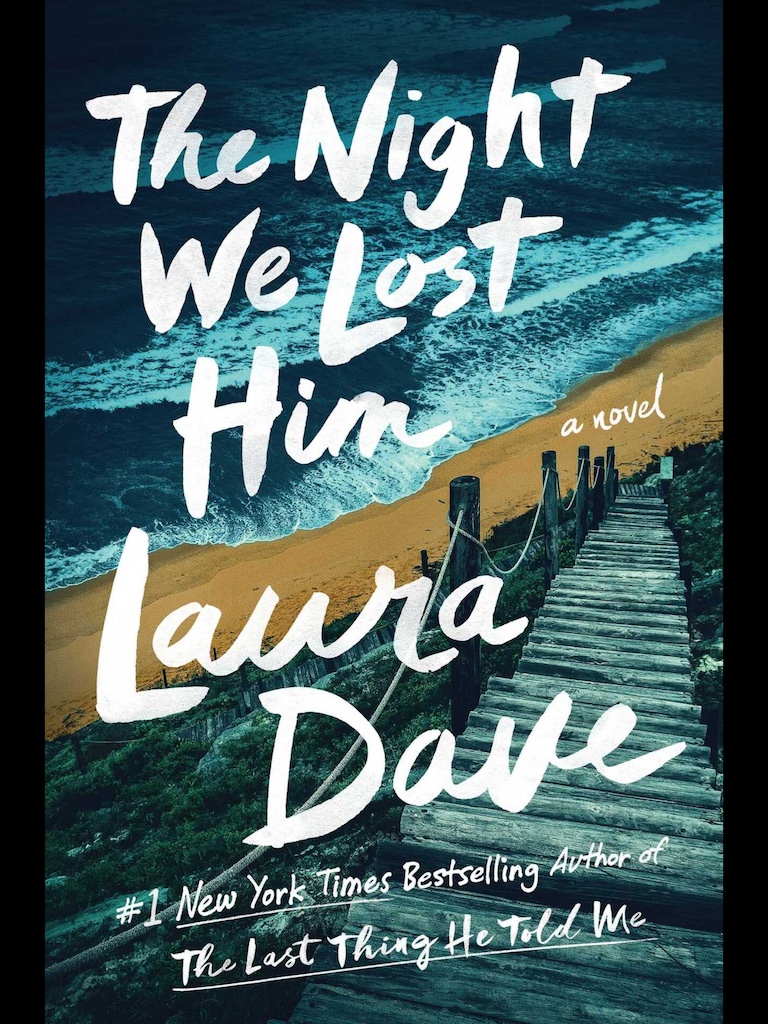
The second book I read in the new year, a gift from my sister, also made my “Best of” list. Laura Dave is an author that I have read and enjoyed a number of her books. So, I was confident I would enjoy this one as well.
The story opens with a father in his sixties, a self-made titan in the hotel industry, standing at the edge of his clifftop property overlooking the Pacific Ocean, reminiscing about his life and some of the choices he made when he suddenly falls to his death onto the rocks eighty feet below. Although ruled by the authorities as accidental, first his son and then his daughter suspect foul play.
The siblings then embark on a journey from New York to California to try to discover what actually happened. Interspersed, in their pursuit, are snippets going back as long as 50 years prior of their father’s earlier life in conversations with another woman, not one of his three previous wives he had. As the story unfolds, important details begin to emerge that seem to resolve the mystery of his death until the most unexpected detail is revealed that changes everything.
Laura Dave got me hooked on her as an author with the first book of hers I read, The Last Thing He Told Me, and this one did not disappoint.
To be continued…
Categories

 onecreativescientist
I read Challenger also. Was haunted by that book and the findings in the ocean. I was living in Florida the day this happened and I ran to the door of the store and actually saw the smoke trails from the explosion. Unforgettable. I love this blog, Dave!
Thanks! Yes that part haunted me too about the findings on the ocean floor. I had no idea you could see the smoke from where you were at the time. That must have been surreal.
It was awful to see the smoke and know they were gone—
Btw, I read
I read 104 books this year. Beat my covid year record! Shades of Mom!
Wow that’s a lot of books! Congrats!
David, both of these books sound fabulous! Especially the “Challenger” book. I am so glad you write these posts – as it gives me ideas for books I want to read, but also to give as gifts. I remember being at work when Challenger blew up. We were all stunned. I look forward to the next post in the series!
Yes Betty parts of the “Challenger” book were haunting to me. You will enjoy reading it.
P.S. I have started a spreadsheet listing the ones I want to read or give.
Very organized! I love it!