Best Books of 2024 – Chapter 1

I am happy to ring in the new year with what for some of my regular readers has become their favorite series of posts—my favorite books that I read from the prior year—this year posting in its 12th edition.
This year, I read a total of 64 books, 44 fictions and 20 non-fictions, a few more than the 55 books I read in 2023 but the most I have read since 2013, the year I began keeping track of the books I read during the year. And of these 64 books, about a fourth of them made my “Best of” list. So, settle up by a fire in a comfy chair, get nice and cozy, and enjoy learning about what I considered as great reads over the next several weeks.

Each year for as far back as I can recall, my daughter and son-in-law have given me one or more books for Christmas. And what has occurred every time in the past, their gift also made my “Best of” list. I suspect that with the release of the major motion picture of the same name, most of you would have heard of this book by David Grann, a journalist and author.
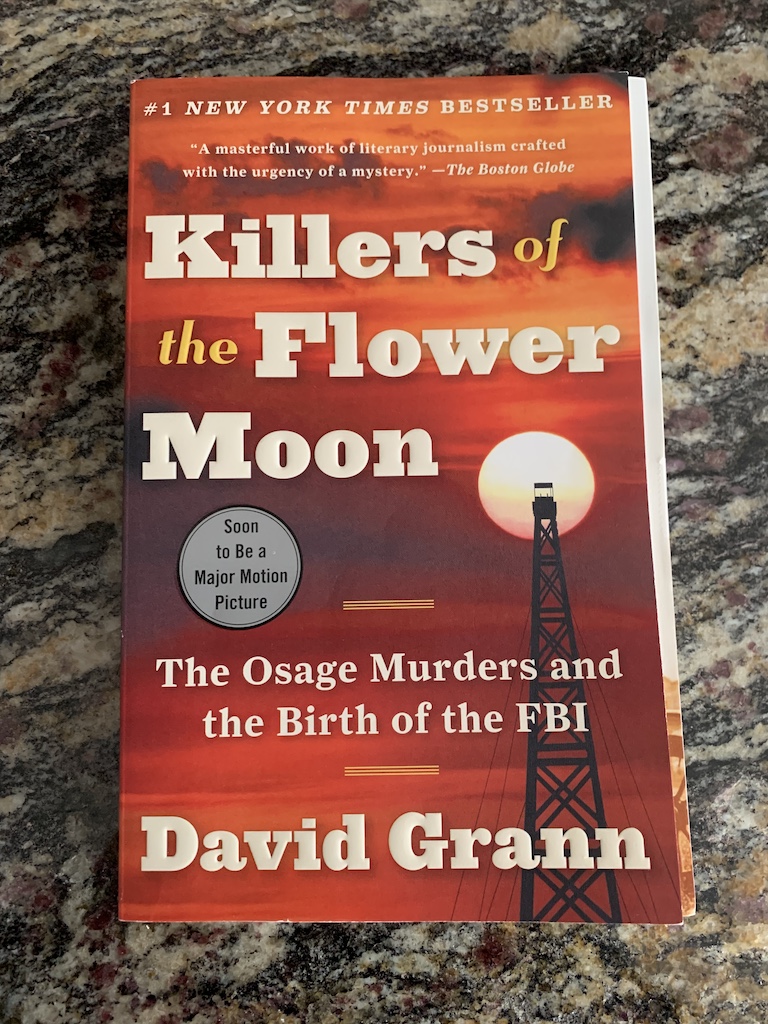
What a sad, sad story! The subtitle to the book gives important clues about the two interconnected storylines, one I obviously knew about, the other totally unknown to me. The book is broken down into three main parts: the Osage murders, the investigation by the Bureau of Investigation (predecessor to the FBI already headed by a young J. Edgar Hoover), and the journalist’s research (David Grann) into the murders almost a century later.
The Osage, like many other native Americans, were relocated more than once by the federal government. What made the Osage unique, is that under the land upon which they were last resettled, was by all accounts in the 1920s, one of the largest oil reserves in the US. This provided for every full-blooded Indian inscribed on the Osage Roll, headrights to the enormous profits garnered by the oil barons of the time since they had to pay the Osage for leases and royalties. This made the Osage some of the wealthiest people in the world. For me, an interesting static quoted in the book was at the time, 1 in 11 Americans owned a car while virtually every individual Osage owned 11 cars.
Anyone reading some of the history of our country knows that our government’s past treatment of native Americans is atrocious. But this story isn’t about what the government did, it is about what ruthless individuals did to steal those valuable headrights. The period from about 1921 to 1926 is referred to as the “Reign of Terror” when unprecedented numbers of suspicious deaths were occurring. Some were clearly murders but others less clear.
After telling about many of these blatant murders in the first part of the book, the second part delves into the government’s investigation headed up by an individual named Tom White. Following that is the author’s continued research into some other Osage murders that were never investigated. While a certain number of murders were readily acknowledged at the time, Grann’s research points out the true number is probably well above the accepted number. This is a book well worth reading.
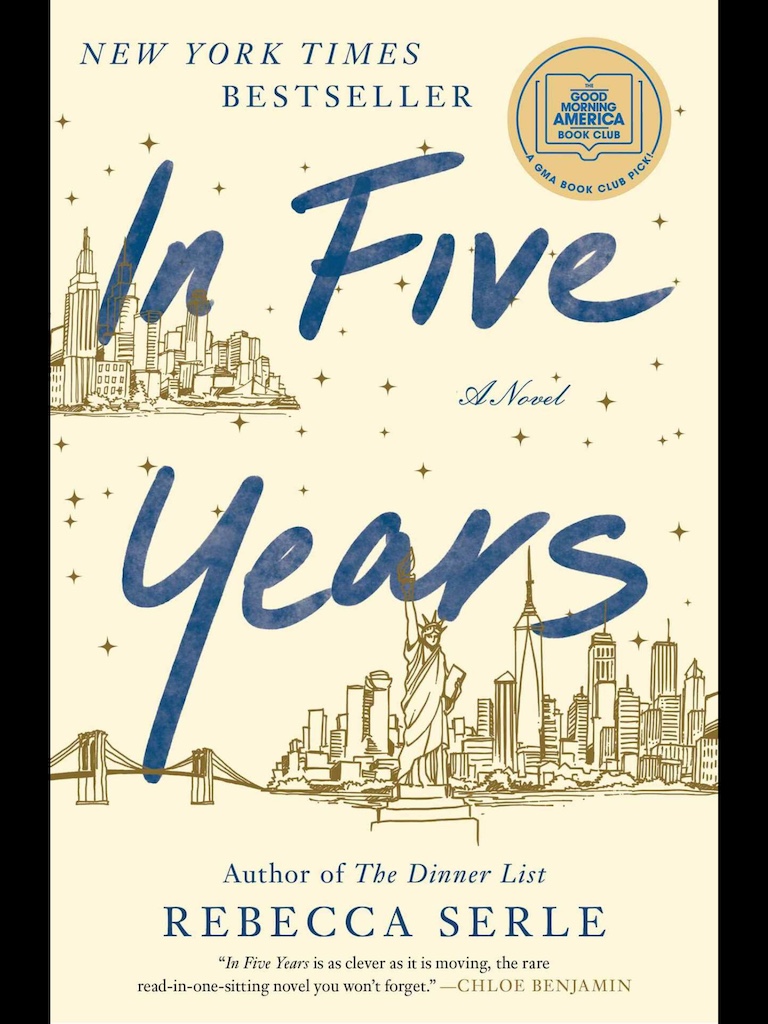
I must once again credit my daily BookBub email for introducing me to In Five Years by Rebecca Serle. If you have read my book posts before, you know I always love a good time travel book. But when I read the synopsis of this book, I thought, now that’s an interesting twist.
Imagine a successful lawyer who has meticulously planned her life out so that not only does she land the dream job she has always wanted, but she accepts a marriage proposal from the man she has been in love with for years all on the same night. But then she falls asleep and awakes five years later, in a different apartment, with a different engagement ring on her finger next to a man she does not know. Her time in the future is brief but eye-opening before she returns to the present, quite shaken from the experience.
Perplexed, she continues to live her life wondering how that glimpse into the future could ever come about. Over the ensuing years, she extends her career success as she continues to enjoy her special relationship with her lifelong best friend, a woman who is quite the opposite of her. But then one day, she meets that mystery man from the future in the most unusual circumstance and starts to get to know him.
To say more would be a spoiler, but if you find my brief description intriguing, you might want to give this book a try.
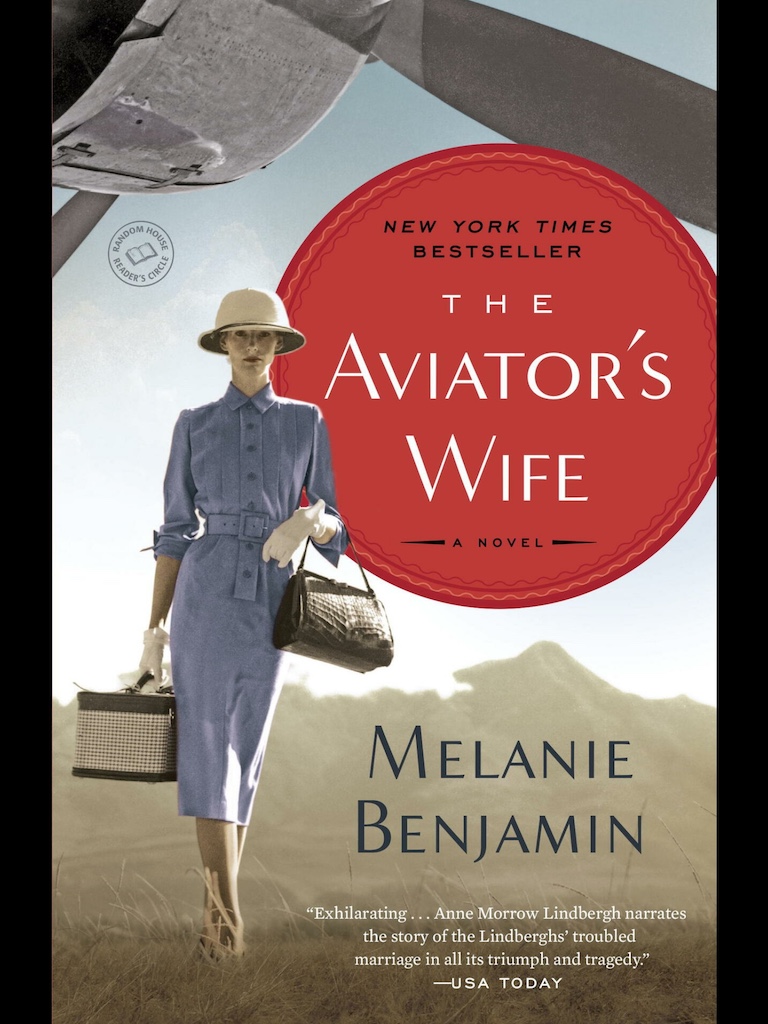
Prior to coming across this book by Melanie Benjamin, my knowledge of Charles Lindbergh was limited to his famous flight, the kidnapping and death of his first-born son, and his work in the aviation industry as a consultant, in particular his role working with Juan Trippe and Pan Am in mapping routes and designing airplanes. Probably about the same awareness as most Americans. I often enjoy reading a historical novel about someone or something I have a vague familiarity with, so I chose to give this one a shot. I was not disappointed.
Obviously told from his wife, Anne Morrow Lindbergh’s perspective it told the story of their first acquittance in Mexico where her father was Ambassador to Mexico up through Charles’ death in 1974. To say it was eye-opening is quite an understatement. I enjoyed learning how in their early years together, she was right beside him in the cockpit mapping out new routes, having been taught navigation and piloting by undoubtably the greatest aviator in history. But all that changed after the “terrible events of 32.”
Afterwards, they grew apart in their lives and political perspectives. While Anne was stuck at home raising all of their children, Charles would be gone sometimes months at a time with his work only occasionally checking in or returning home. At the conclusion of several chapters throughout the book, there would be a snippet of the year 1974 as Charles was dying and the true extent of his infidelity became clearer. Not until the very end was all of the surprises revealed.
This book gave me a much different impression of the famous man, and for me, knocking him down a few rungs on his pedestal. In the Afterward where the author separated fact from fiction in the book, she also wrote that she enjoyed writing historical fiction and her greatest success was if it prompted the reader to seek to learn more facts about the story. Well, she succeeded for me as before I finished reading her book, I added the definitive Biography on Lindbergh, one I found out in the Afterward that she indicated was an important source for her research.
To be continued…
Categories

 onecreativescientist
I too loved Killers of the Flower Moon—read it twice—once before and once after the movie. The others are now on my “to read” list. I always love this series of posts! Thanks Dave!
Thanks, Sis. Yea this was actually my second reading of the book as well. Have not seen the movie yet. Hope you enjoy the other books.
Always an interesting series, David! Noting that this post is Chapter 1 and the 12th edition of this series, I have to smile. You are so organized! I have noted “In Five Years” as one I’d like to read. The others I am glad to know about. I know years ago I read, “Gifts from The Sea” by Anne Morrow Lindbergh. I don’t know a whole lot about Lindbergh (though I am from St. Louis). I enjoy Historical Fiction as a way to learn history, so “The Aviator’s Wife” is also a good choice for me. I am taking notes! Looking forward to the Chapter 2 in the 12th edition!
Thanks Betty! I do hope you will enjoy the books. It’s very cold here so I know you are warmer where you are. Hope you have a great week!
Have a great week, too, David! The weather here is fabulous! Our neighbors back home are sending us pictures of all the snow!