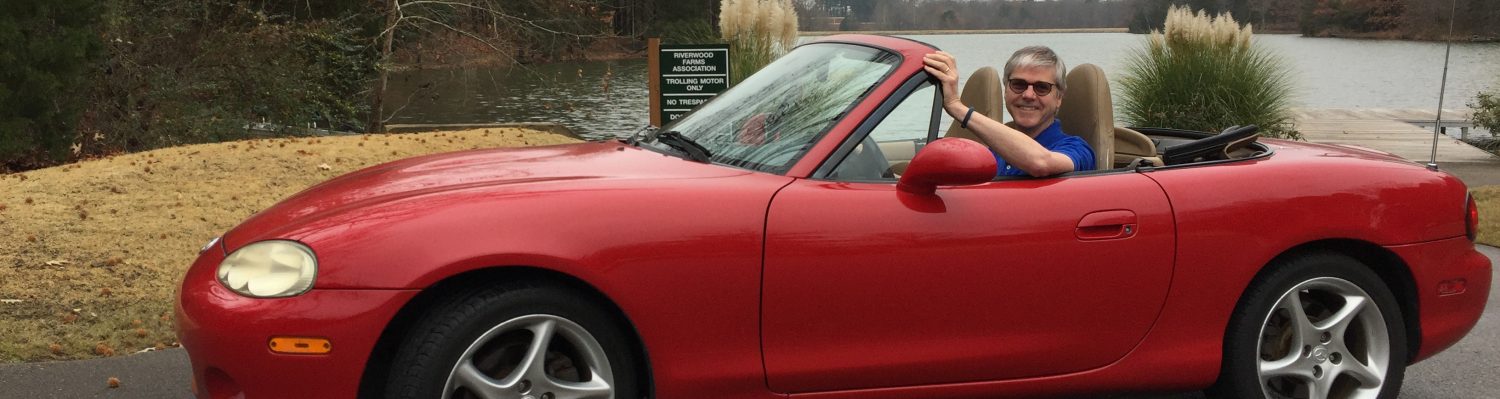
Motor City BroGo – 3rd Gear
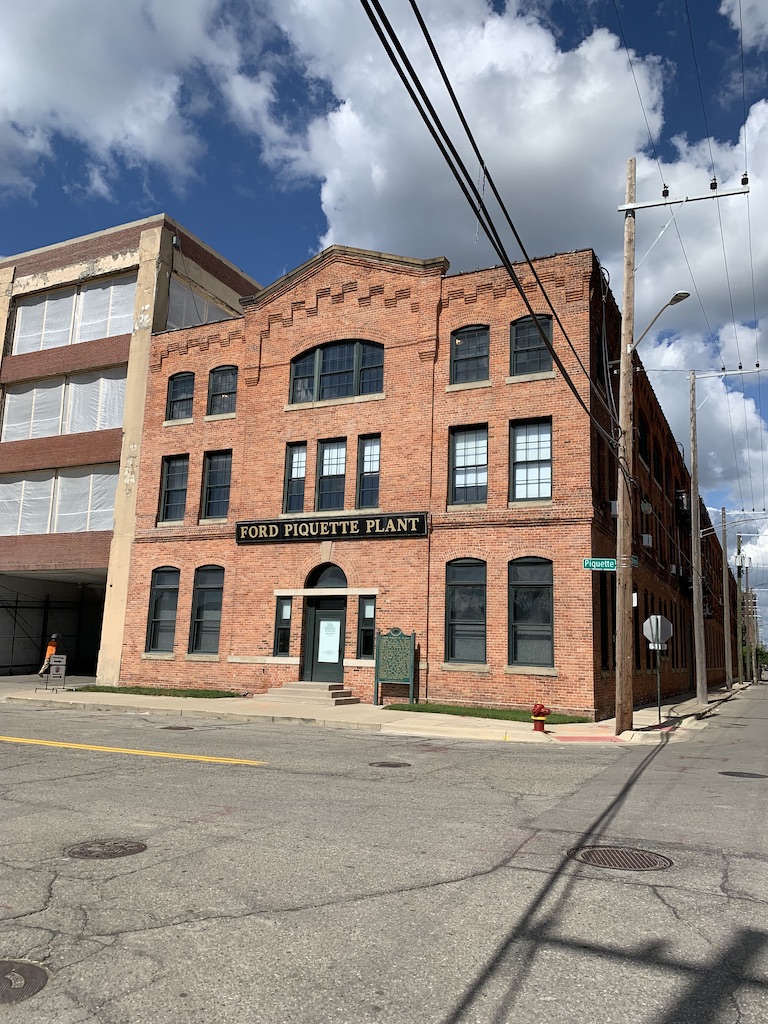
On Thursday of our BroGo, I was in for two big surprises. When my brother did his research for our trip, he found that we could take a tour of the Ford Piquette Plant. I had learned about this plant in one of the books that I had read about Henry Ford, and I knew some of what was produced there but I had no idea the plant still existed. Not only does it exist as a museum, but it is now a registered National Historic Landmark.
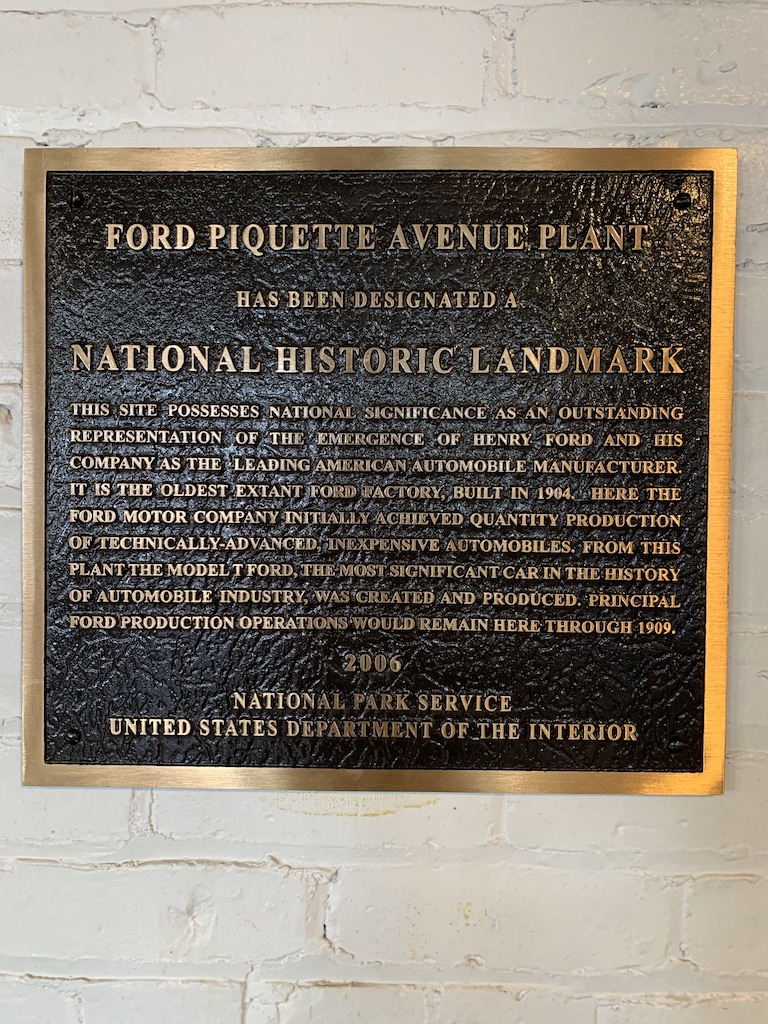
My brother learned that you could tour the museum on your own, or you could take a guided tour. We chose the latter and arrived just a bit early for the 10:00 AM tour. Prior to the start of the tour, we were able to view Henry’s office as reproduced from this vintage photo.

When recreating the office, they cut away part of the wall so visitors could get a full view without simply looking through the door. The reason the office had to be recreated is because after Ford moved to their new Highland Park plant, he sold the building to Studebaker. The reason Ford moved was to implement his famous automobile assembly line.
Our tour guide arrived, and he was an elderly gentleman that had we been here 20 years earlier when the museum opened, we could have easily thought he might have worked in the plant given the wealth of historical knowledge he had.
For the sake of brevity rather than saying tour guide each time, I’ll refer to him as “Jack” and after a few brief words, he introduced us to an award-winning documentary film that provided a good bit of history. Henry founded the Ford Motor Company in 1903 and he leased space to begin production (actually this was Ford’s third car company, the first having gone bankrupt and the second Ford having been forced out). The Piquette plant opened in 1904 and remained open until 1909 when production was moved to Highland Park. Ford’s plant was the first one right next to the railroad track in what was called “Milwaukee Junction.” With easy access to a railroad yard for transport of the finished autos, other car producers located here as well, and with so many car companies in this one location, Detroit became known as the Motor City.
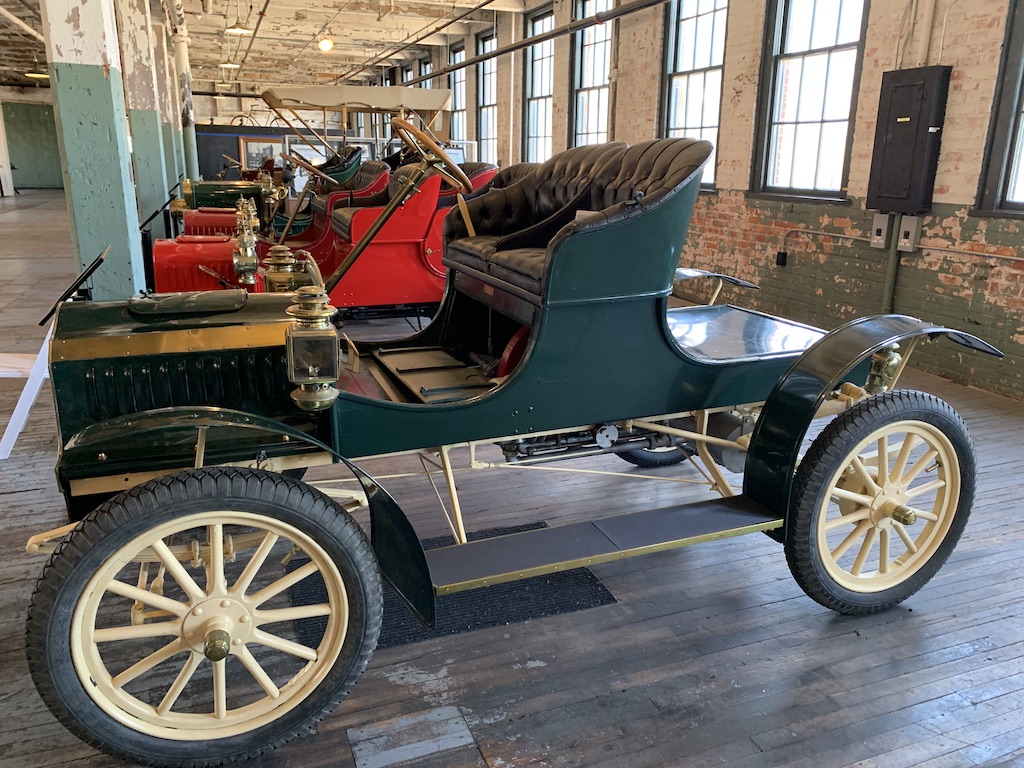
Most Americans are familiar with the original Model A and most adults of a certain age world-wide are familiar with the Model T, but Ford produced an assorted alphabet of other models in this plant (B, C, F, K, N, R, S), all of which were on display here.
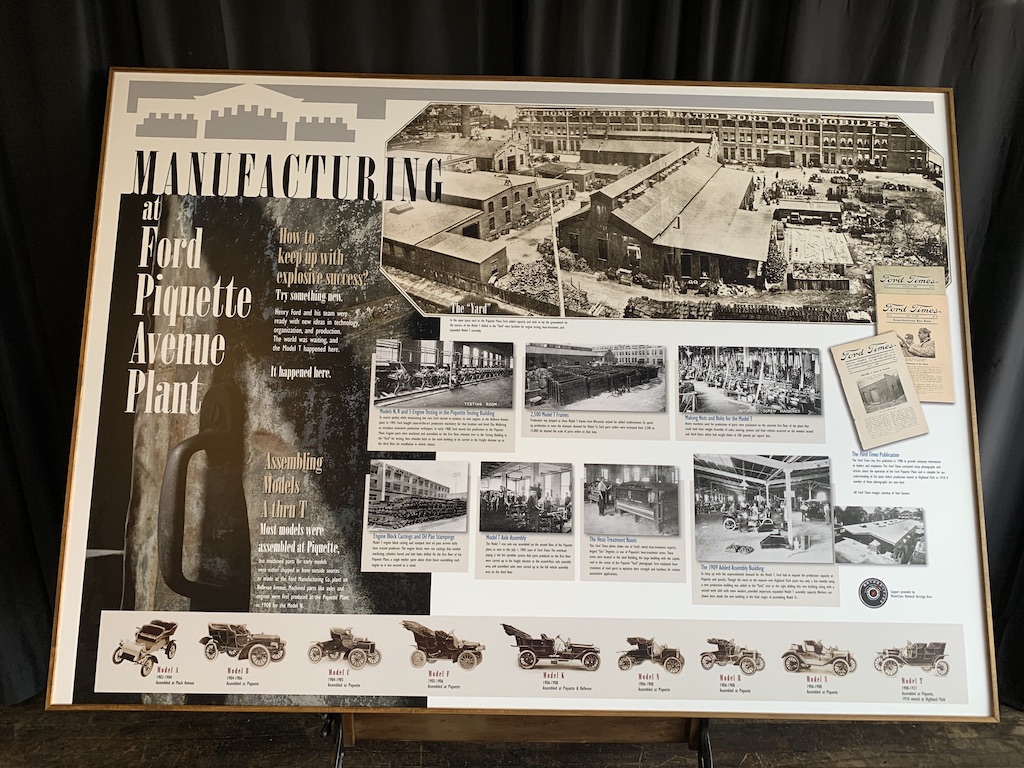
You will note not all letters of the alphabet are represented here. Jack explained that Henry used all the letters of the alphabet to designate his models but not all of them went into production. In fact, after reaching the end of the alphabet, he started over with “A” thus the Model A was two completely different cars, one pre 1904 and the other post 1927.
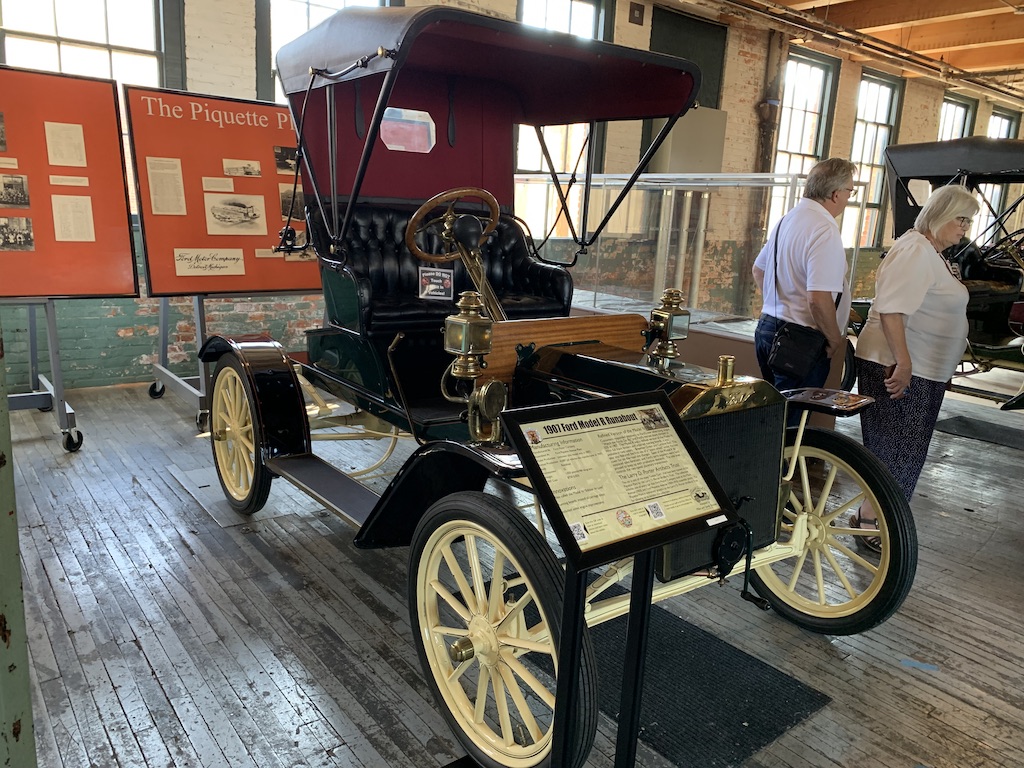
Jack explained that Ford was also very big into racing and firmly believed in the slogan “Win on Sunday, Sell on Monday.”

On the third floor, we got to see how production operated pre-assembly line when the car being assembled remained stationary and the workers moved from one car to the next progressively building it.
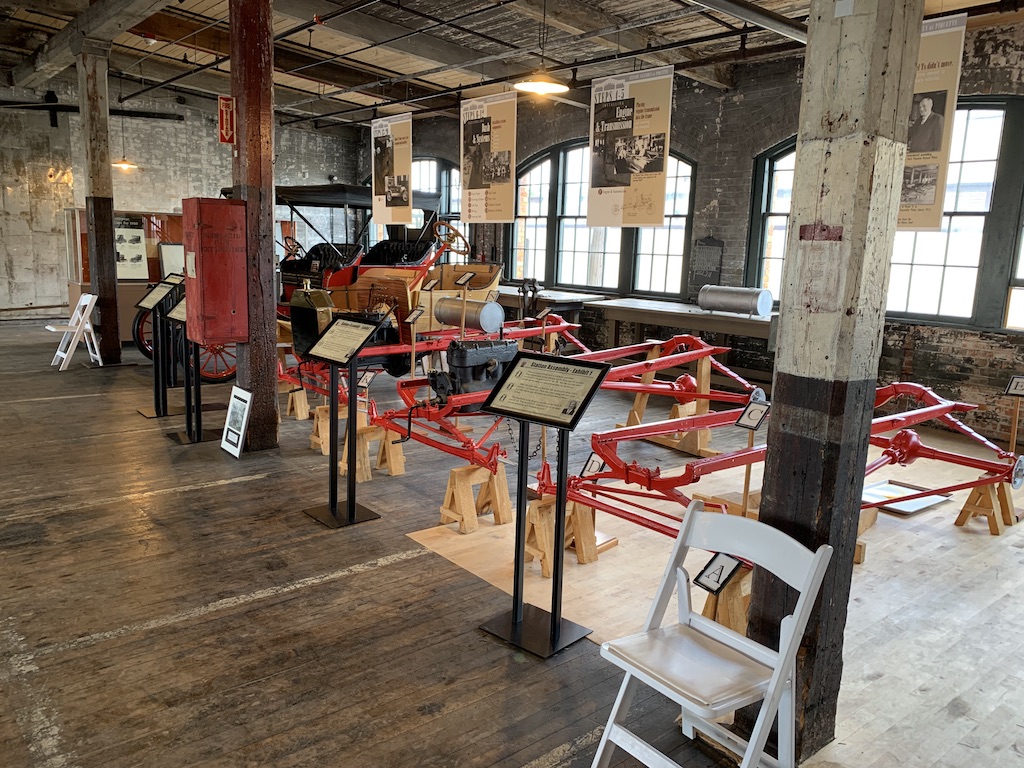
In the early years, Ford mostly assembled his cars from parts and subassemblies produced by others, the Dodge Brothers being one of Ford’s largest suppliers (the same brothers that went on to form their own car company).
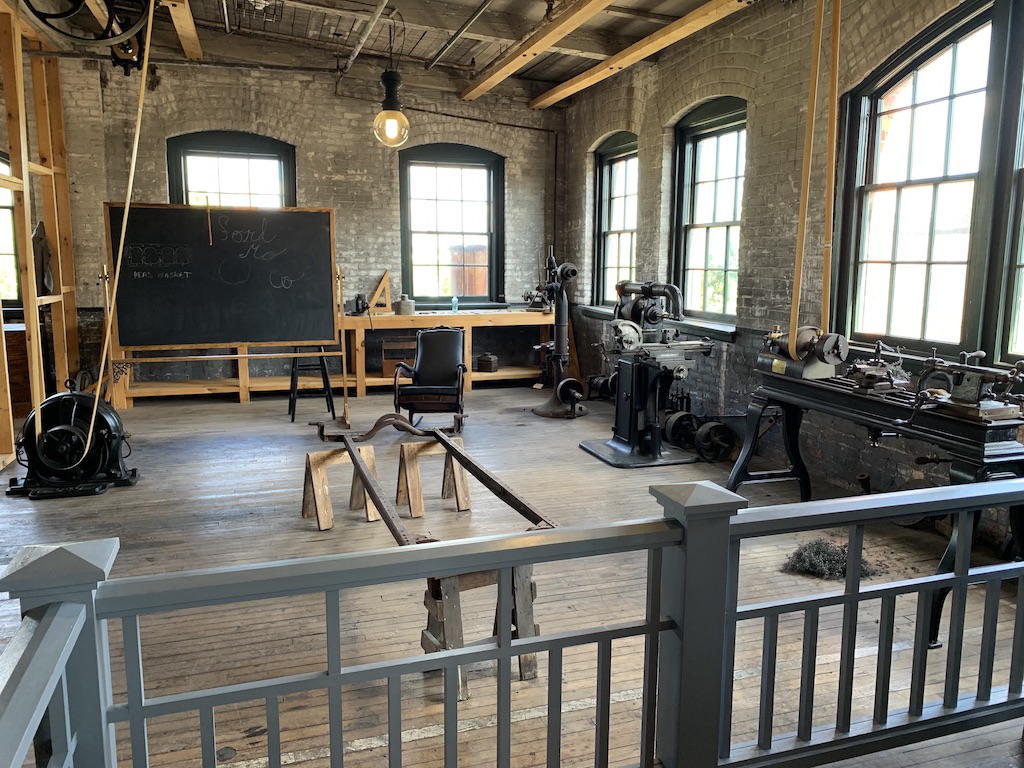
But all that changed within this secret room on the third floor where the Model T was conceived, designed, and engineered. Each part was drawn on the black board and then photographed. The photo was then handed over to a draftsman to draw up plans and the blackboard erased for conceiving the next part.
The popularity of the Model T was truly phenomenal but even with all the efficiencies that could be incorporated into this plant, they could not get the production time down to less than 12 hours (with the eventual assembly line, they were better able to keep up with demand by getting production time down to just 12 minutes, thus also making it more affordable than many of its competitors which drove demand even further).
Throughout the tour, Jack expertly provided a wealth of information such as why the early cars were all black, how new colors were eventually added, and why the car shifted from “right-hand” steer in early models to “left-hand” steer in later models (a question I asked and was most surprised by the answer).
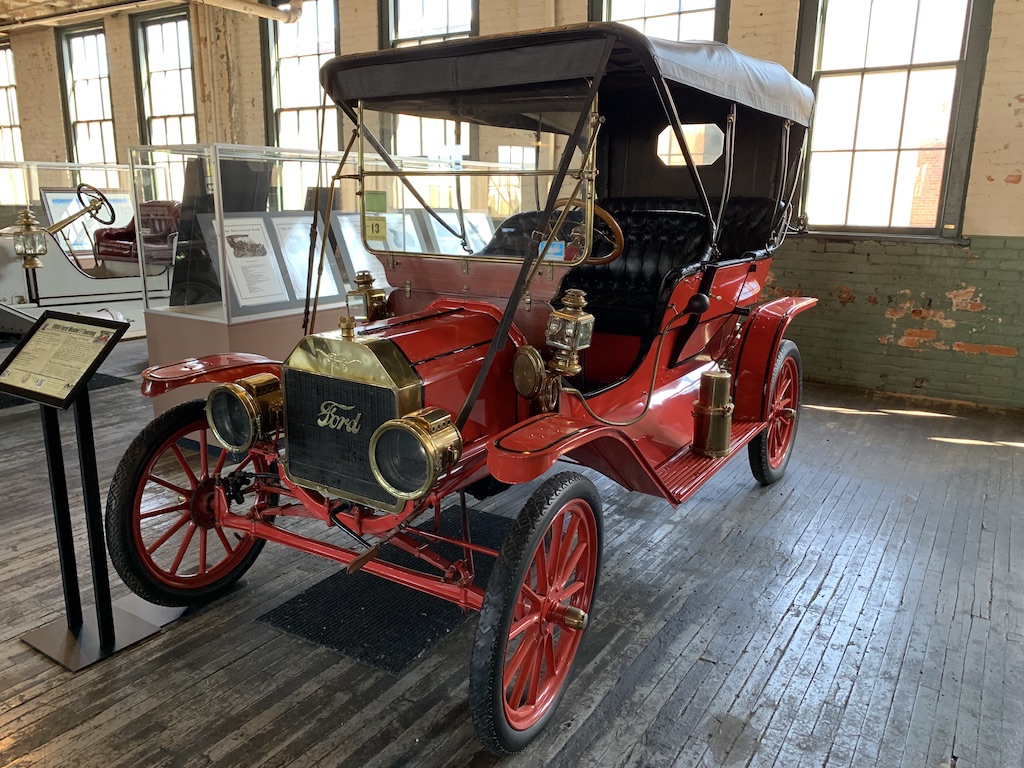
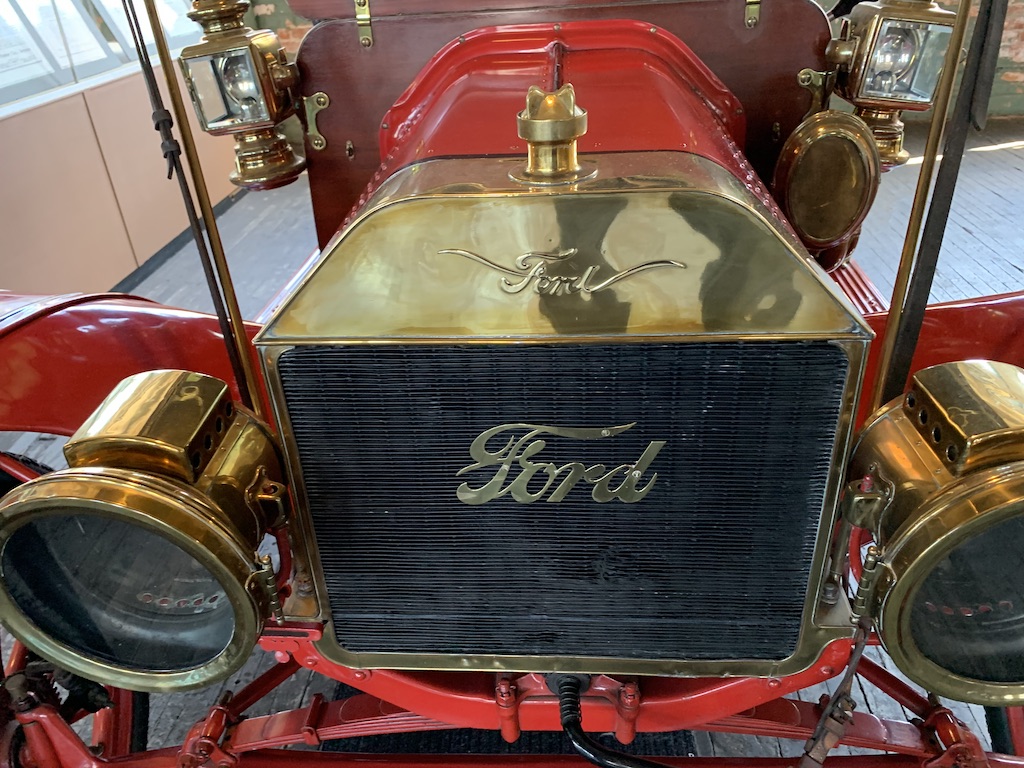
Jack even explained that the “wings” on the Ford name adorning the top of the radiator indicated that the car was made at the Piquette plant.
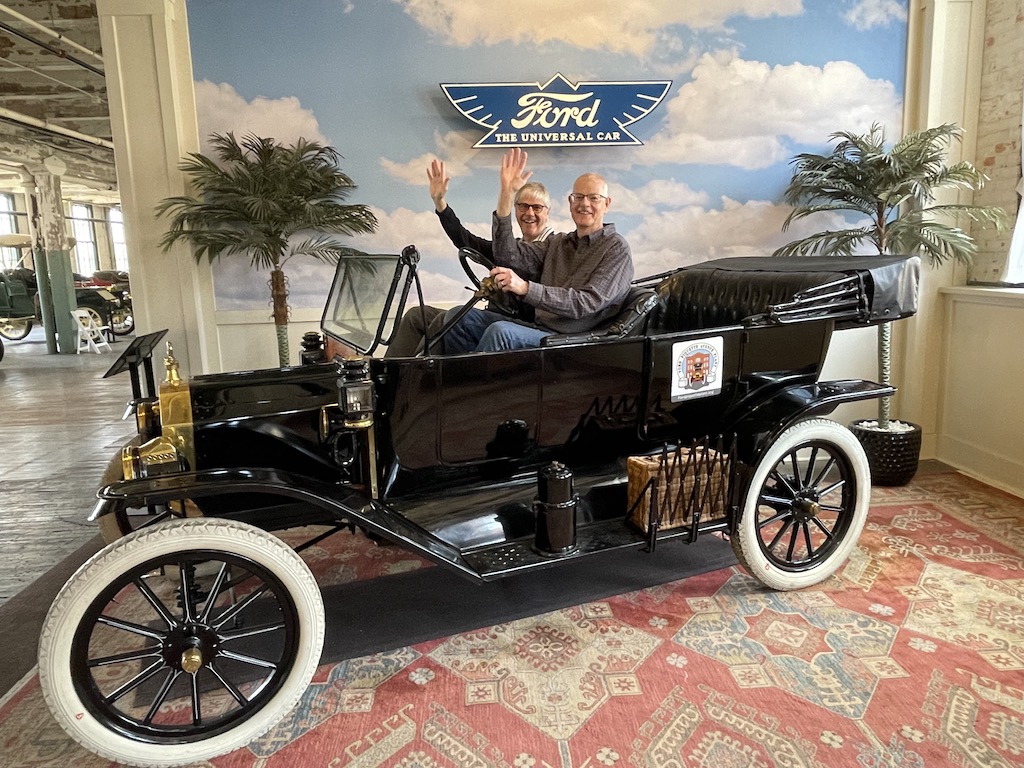
Our last stop was to get our picture taken in a vintage Model T.
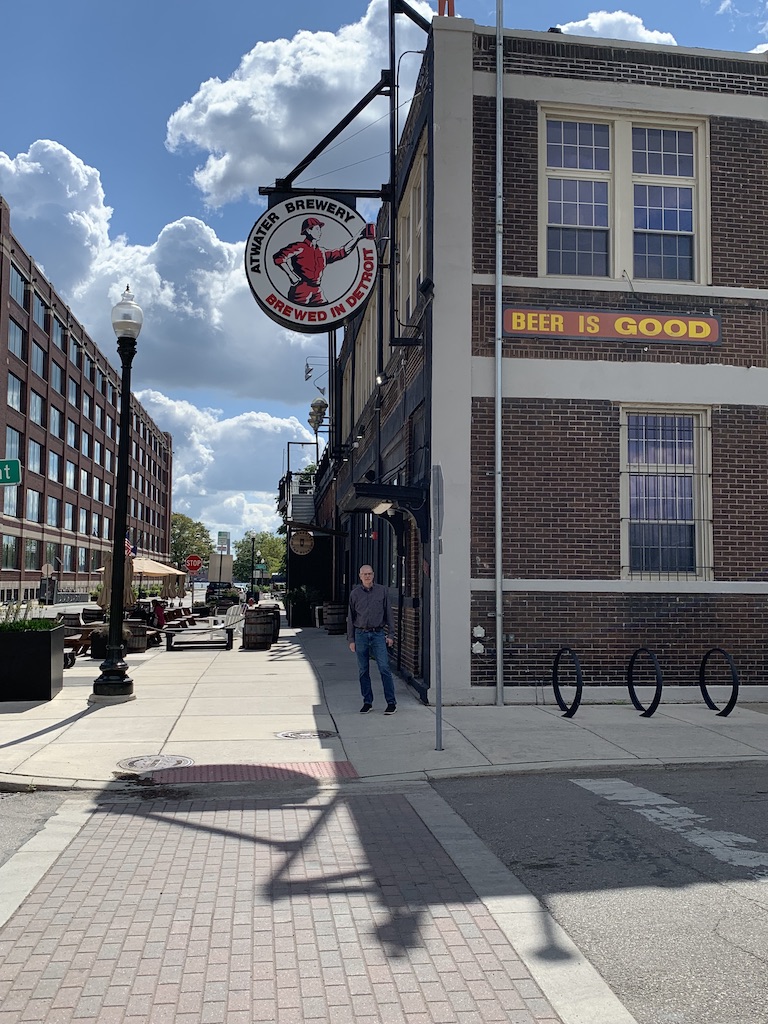
After lunch at a local craft brewery…
…and a walk along the Detroit River, we went to our second museum which provided my next surprise of the day.
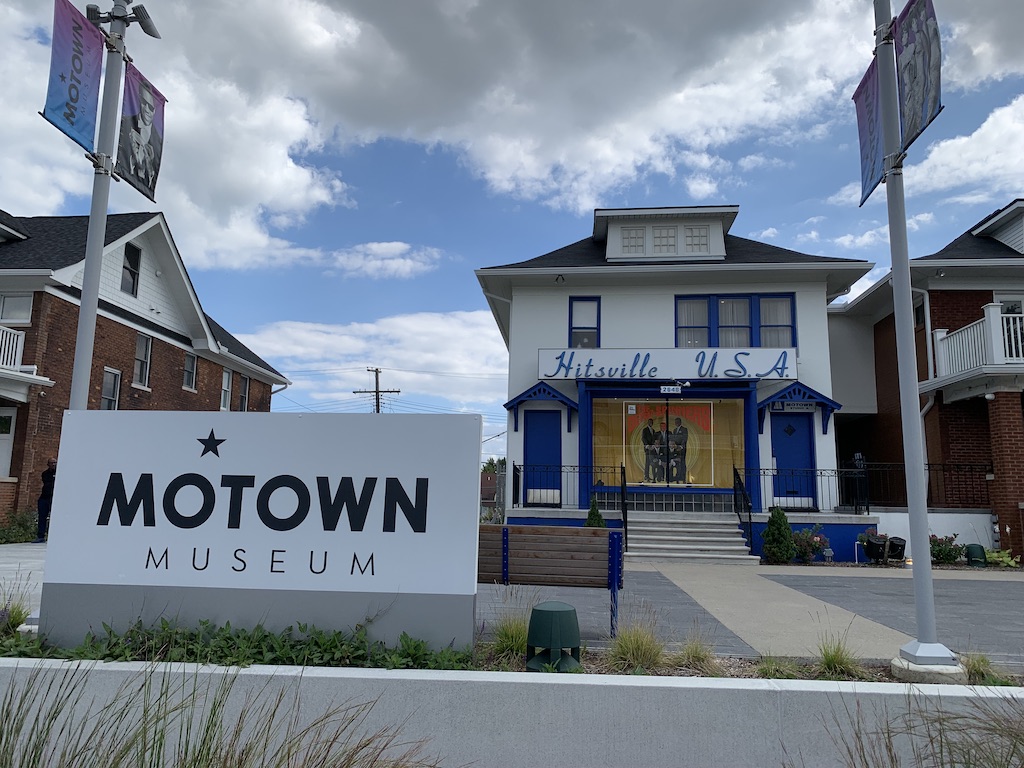
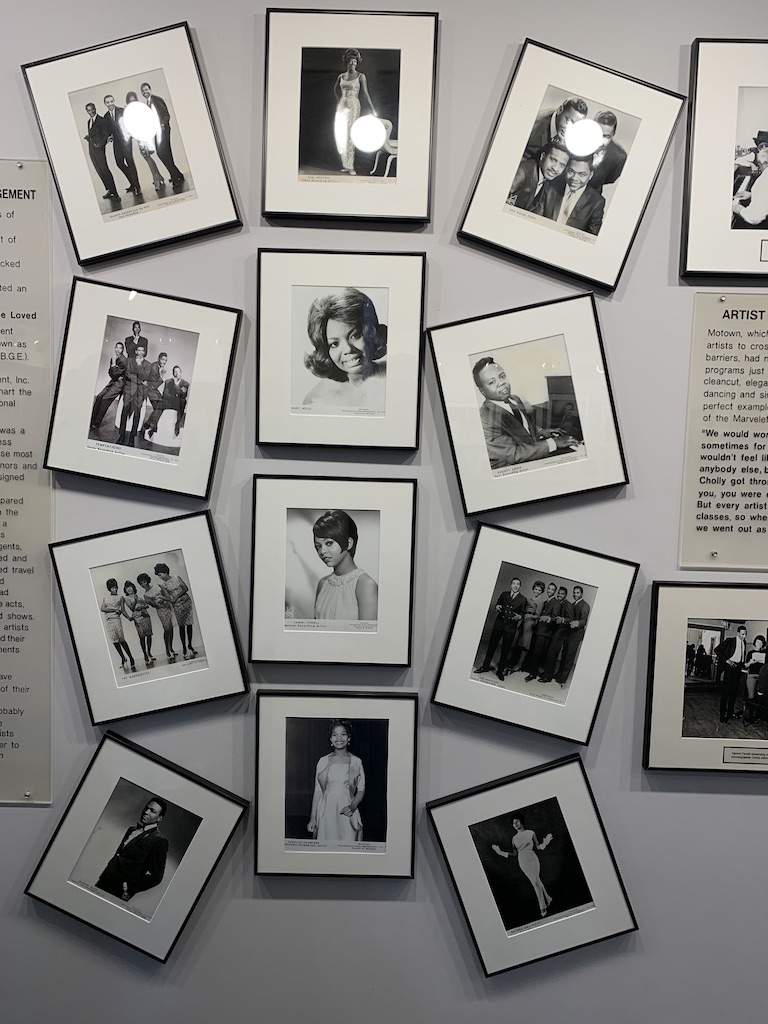
Knowing that Motown was a major recording label, I was quite surprised to learn that it got started in this house in 1959 and recorded here until 1972 when they moved to larger quarters. Similar to the STAX studio in Memphis, Motown drew from the neighborhood youth and trained them to become successful artists (our tour guide shared the story that the young Stevie Wonder loved Baby Ruth candy bars and the founder made sure he knew that the fourth pull knob over from the right on the candy machine was that candy and could be procured with a dime on top often left by others). A wall of photos highlighted some of the artists who got their start here such as The Four Tops, the Supremes, The Jackson Five, Smoky Robinson, Marvin Gaye, and the Temptations just to name a few.
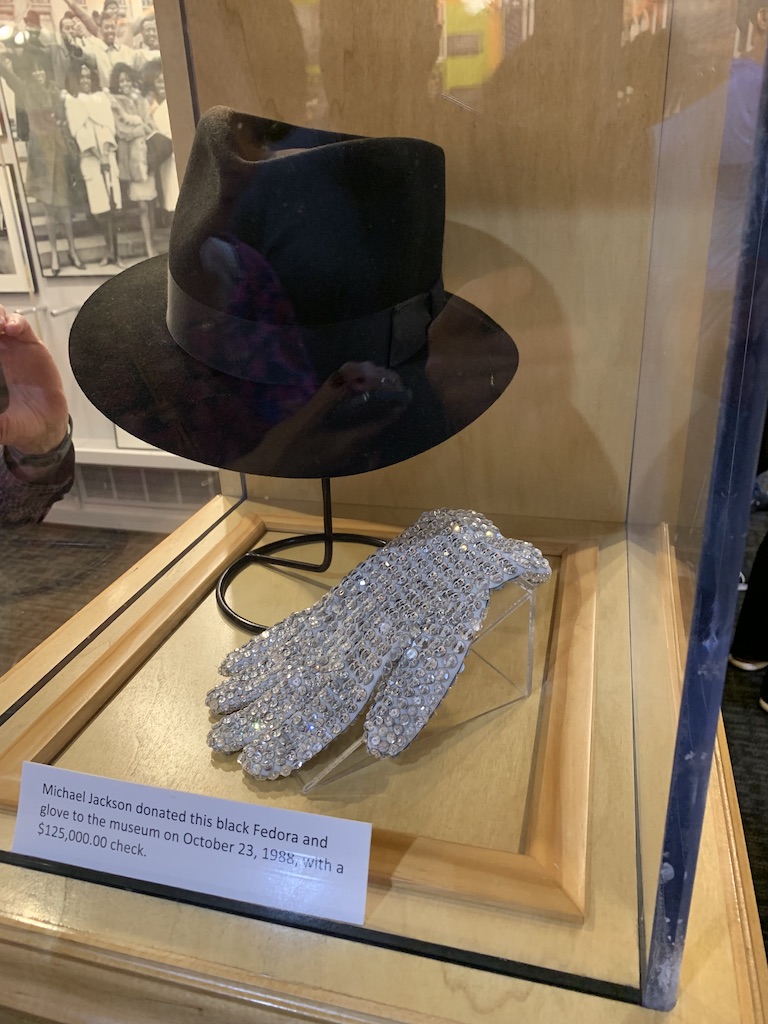
Michael Jackson’s donation to the museum was a popular attraction…
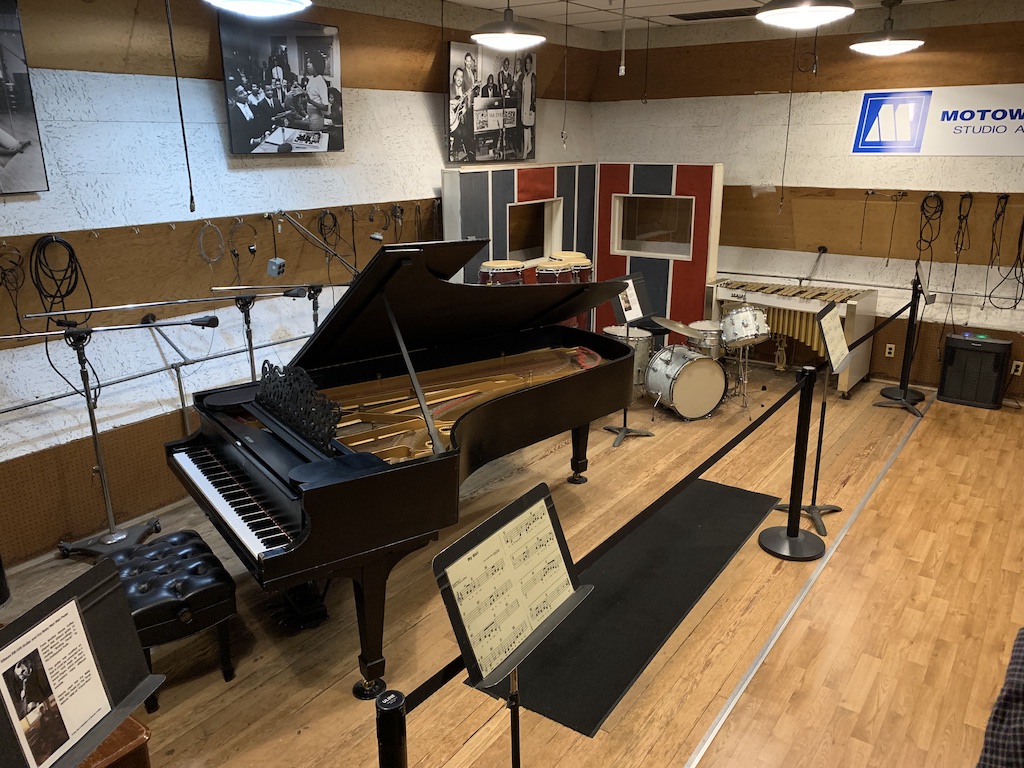
…but for me, it was standing in the actual recording studio where so many famous artists had recorded that provided the highlight of the tour.
After the tour was over, we satisfied our thirst for more craft breweries in Detroit by visiting two more…
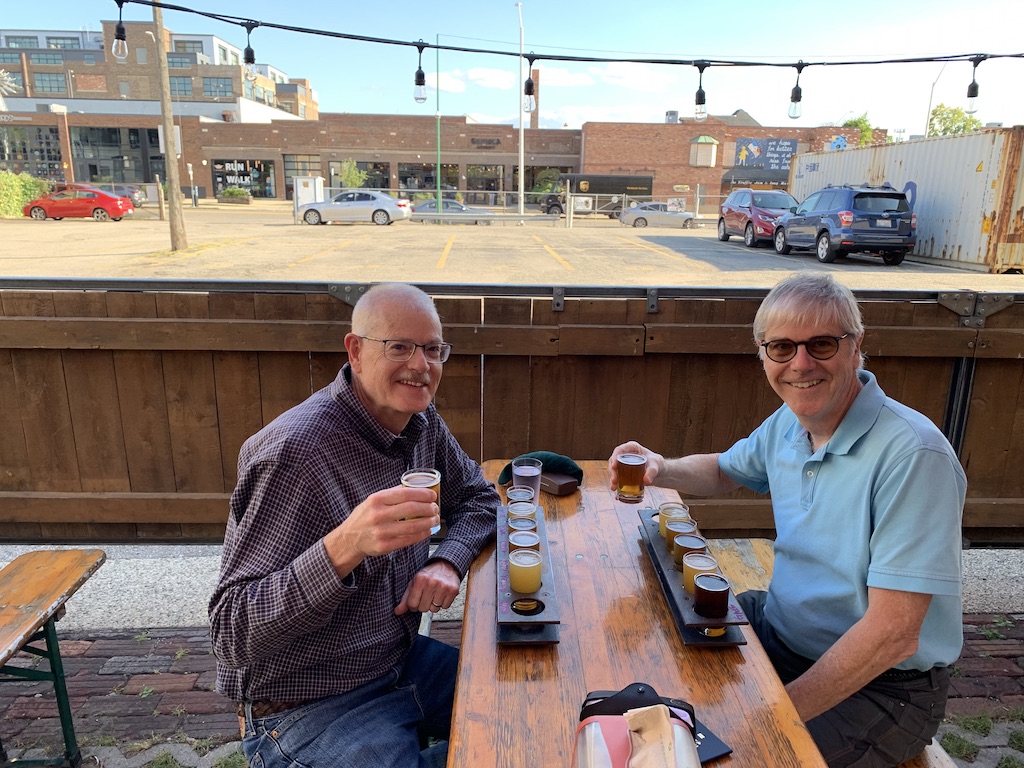
…before finishing the evening at a third craft brewery for dinner.
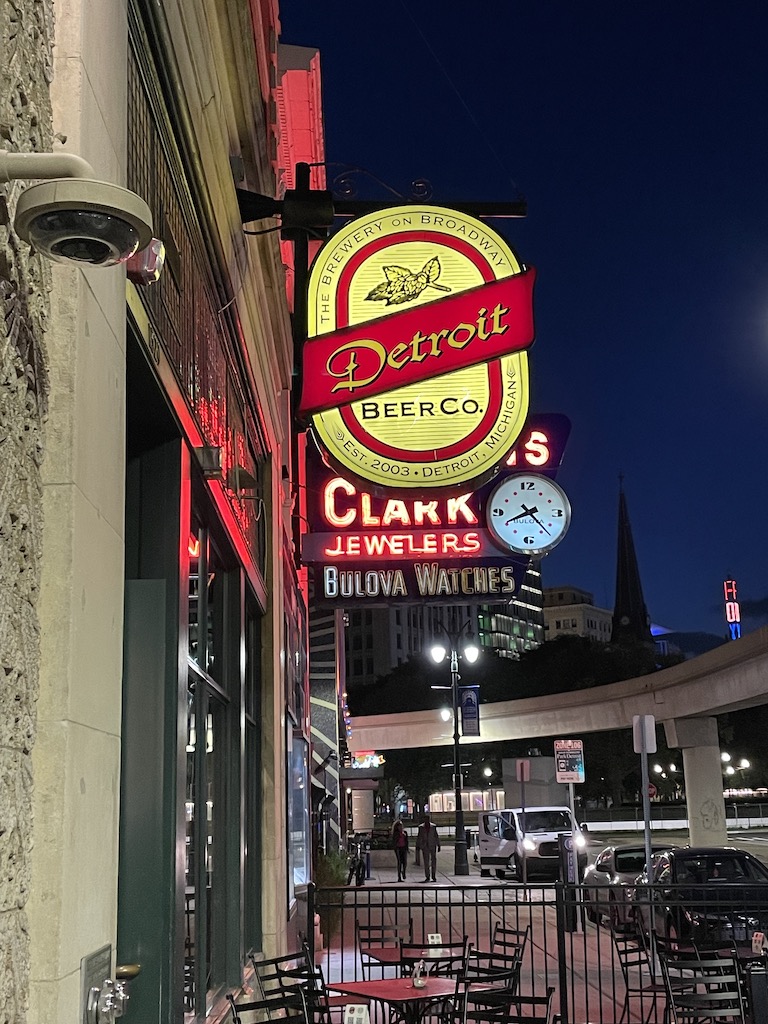
Over dinner, we could reflect on what a surprising and interesting day it had been…
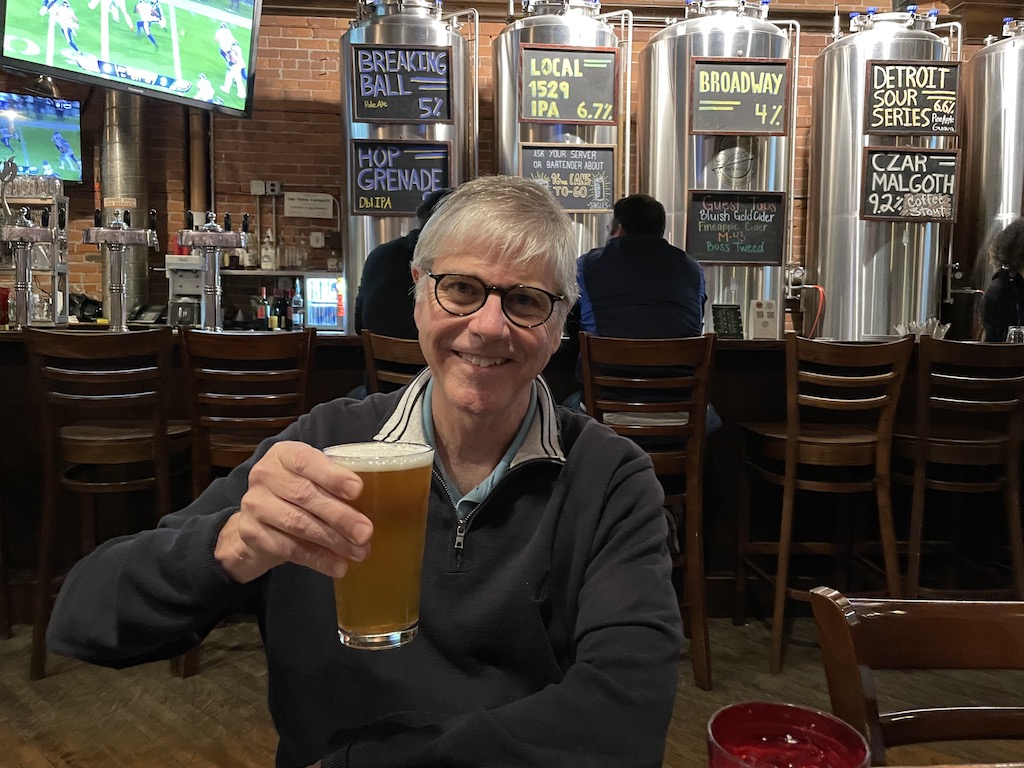
…before heading back to our hotel.
To be continued…
Categories

 onecreativescientist
Kudos to your brother for planning such a great day. I always prefer a tour with a guide rather than a self-guided tour when given a choice. A guide can enhance the experience greatly, and it sounds like this was exactly the case with your tour of the Ford Piquette Avenue Plant. Before reading these posts, I would have never put Detroit on my bucket list of places to visit. It is now. My thinking is we will head that way after our annual trip to Pentwater – not in 2024 but perhaps in 2025. I am sure Dan will enjoy it very much as I know I will. I just hope Jack is still there! Thanks for your post, David!
Thanks, Betty. I know you will have a good time when you do go. My previous visits to Detroit had just been to go to the car show and the Ford museum so thanks to my brother’s planning, we did a lot of fun and interesting things. “Jack” did make all the difference on our tour of the plant. He was a real gem.
Hope you have a nice Sunday!
Thanks! Hope you have a nice Sunday, too.
Ok, you’ve convinced me to add Detroit to my list of American cities I didn’t expect to want to visit! (Along with the likes of Cleveland, Pittsburgh, and Kansas City).
I am glad you added it as I think you will find, as we did, some unexpected treasures. Thanks for stopping by!